
What I Learnt From Listening to Management Interviews Today
October 9, 2026 | StockScans Daily Management Interview Series
Today's conversations covered IT services, jewellery, infrastructure, real estate, microfinance and specialised healthcare.
The interesting part? Every business is dealing with a different question.
TCS is seeing improving growth breadth without a major change in demand. Jewellery retailers are navigating high gold prices. KEC has a strong order book, but margin sustainability matters. Real estate faces a shift in the interest-rate cycle. Microfinance is working through credit stress, while HCG is expanding its cancer-care network.
Here are the lessons that caught my attention today.
1. TCS: Growth is improving, but the demand environment hasn't changed much
TCS reported its fifth consecutive quarter of sequential growth, with deal wins remaining strong.
A few things stood out:
Total contract value (TCV) came in at $9.6 billion, excluding two deals that were yet to close.
Most business verticals grew, with consumer and engineering research and development among the exceptions.
Management highlighted a new category of AI-led transformation deals, where contracts are increasingly linked to business outcomes.
Margins remained slightly soft at around 24%.
What caught my attention?
The recovery appears to be improving in breadth rather than coming from a sudden surge in technology spending.
That distinction matters. When multiple verticals and geographies begin growing together, the recovery becomes more convincing than when growth depends on just one or two pockets.
But deal wins and revenue growth are different things. Large contracts need to convert into revenue, and revenue needs to translate into margins.
What I'd track next: TCV conversion, the number of growing verticals, AI-led revenue contribution and margin recovery.
Interview: https://www.youtube.com/watch?v=FQ4IfTWZnCk
2. Senco Gold: Festive demand can hold up even when margins come under pressure
High gold prices are changing how jewellery customers purchase.
Management discussed the role of old-gold exchanges and the discounts required to keep transactions moving.
The interesting part is that customers may still buy jewellery, but the economics of those sales can change. Exchange offers help maintain demand, while the associated discounts can dilute margins.
What caught my attention?
Revenue alone may not tell us how healthy festive demand really is.
When gold prices rise sharply, customers can exchange existing jewellery rather than pay entirely in fresh cash. This keeps transactions moving, but the company may have to offer more attractive deals to make the purchase happen.
That creates a gap between sales momentum and profitability.
What I'd track next: Old-gold exchange mix, discounting, making-charge margins and whether festive sales growth translates into healthy profitability.
The broader lesson: in high-ticket retail, the quality of demand matters just as much as the quantity.
Interview: https://www.youtube.com/watch?v=Co30nWh8-j8
3. KEC International: A ₹25,000 crore-plus opportunity comes with a margin question
KEC's transmission and distribution (T&D) business is operating at double-digit margins, with an order book and L1 position exceeding ₹25,000 crore.
The opportunity is clear. Power-grid investment is creating a substantial pipeline of work.
But one question matters just as much as the size of the opportunity: can these margins sustain as more companies compete for the same orders?
What caught my attention?
A strong industry cycle can attract more competitors. As bidding becomes more aggressive, companies may win larger orders without necessarily earning the same margins.
This is why order-book growth should never be analysed in isolation.
An order won at an attractive margin can create value for years. An order won too aggressively can increase revenue while disappointing on profitability and cash flow.
Geopolitical uncertainty in the Middle East is another factor worth monitoring for businesses with regional exposure.
What I'd track next: T&D margins, order execution, new order wins versus L1 positions, working-capital requirements and cash conversion.
The key question isn't just how much work KEC can win. It's how profitably it can execute that work.
Interview: https://www.youtube.com/watch?v=BYBo-N2Fy-c
4. Brigade Enterprises: Interest rates can change buyer sentiment before they change the numbers
Brigade's management discussed the impact of the RBI's first rate increase in nearly four years.
Management acknowledged that the move could affect sentiment, while also noting that much of the reaction may already have been anticipated.
What caught my attention?
Real estate is one of those sectors where psychology matters enormously.
A home purchase is a major financial commitment. Even a relatively small change in interest rates can influence how buyers think about affordability, borrowing and whether they should purchase now or wait.
However, sentiment commentary alone doesn't tell us how much actual demand has changed.
The real test will be visible in bookings and new launches.
What I'd track next: Quarterly pre-sales, launch execution, sales velocity and the conversion of the launch pipeline into bookings.
For real estate investors, the direction of interest rates matters. But the company's actual sales performance will tell us whether sentiment is translating into business.
Interview: https://www.youtube.com/watch?v=lfZ5FJEh7ts
5. Satin Creditcare: Stable margins matter when the lending cycle is difficult
Microfinance lenders have been navigating elevated credit stress. Against this backdrop, Satin Creditcare's management highlighted a 55-basis-point reduction in its cost of funds and indicated that margins should remain stable.
The company's recent margins were also highlighted as being near the upper end of the range seen over several quarters.
What caught my attention?
In a difficult credit cycle, growth isn't necessarily the most important metric.
A lender can grow its loan book quickly, but if collections weaken and credit costs rise, that growth may create problems later.
Lower funding costs can help protect profitability. But they need to be evaluated alongside borrower repayment behaviour and the quality of the loan book.
What I'd track next: Collection efficiency, portfolio-at-risk trends, credit costs, funding costs and loan-book growth.
The lesson is simple: in lending, especially unsecured lending, the quality of growth matters more than the headline growth rate.
Interview: https://www.youtube.com/watch?v=fvG79Hw0JtU
6. Healthcare Global (HCG): Don't judge a hospital network by one new centre
HCG's management made an important point during today's interview: investors should look at the margins of the overall network rather than evaluating individual emerging centres in isolation.
Management cited consolidated margins of around 20%.
The latest reported numbers provide useful context:
Q1 FY27 revenue was approximately ₹695 crore, up around 13% year-on-year.
EBITDA margin increased to 19.4%, compared with 18.2% a year earlier.
FY26 revenue grew 15%, supported by 11.6% growth in patient volumes.
FY26 EBITDA margin reached 18.3%.
What caught my attention?
Hospital chains have a different growth equation from many asset-light businesses.
A new hospital or treatment centre requires investment before it reaches mature utilisation. In the early stages, it can dilute consolidated margins even when the long-term expansion opportunity is attractive.
HCG's North Bengaluru centre, which opened in May 2026, contributed around ₹6.7 crore in Q1 FY27 revenue. The business is still in its early ramp-up phase.
The question is not simply whether the new centre is contributing today. It is how quickly utilisation and revenue improve as the centre matures.
HCG is also expanding existing facilities across Ahmedabad, Bhavnagar, Cuttack and Ranchi.
Interview: https://www.youtube.com/watch?v=CnpeLQ4ZYLs
Some Concall Insights Today
Beyond management interviews, we went through three earnings calls that offered some interesting lessons on business performance, profitability and growth.
1. Poonawalla Fincorp: Profitability is improving from multiple directions
PAT rose 22% QoQ to ₹375 crore.
GNPA declined to 1.20% from 1.37%.
NIM plus fees expanded to 9.26%, while credit costs declined to 2.19%.
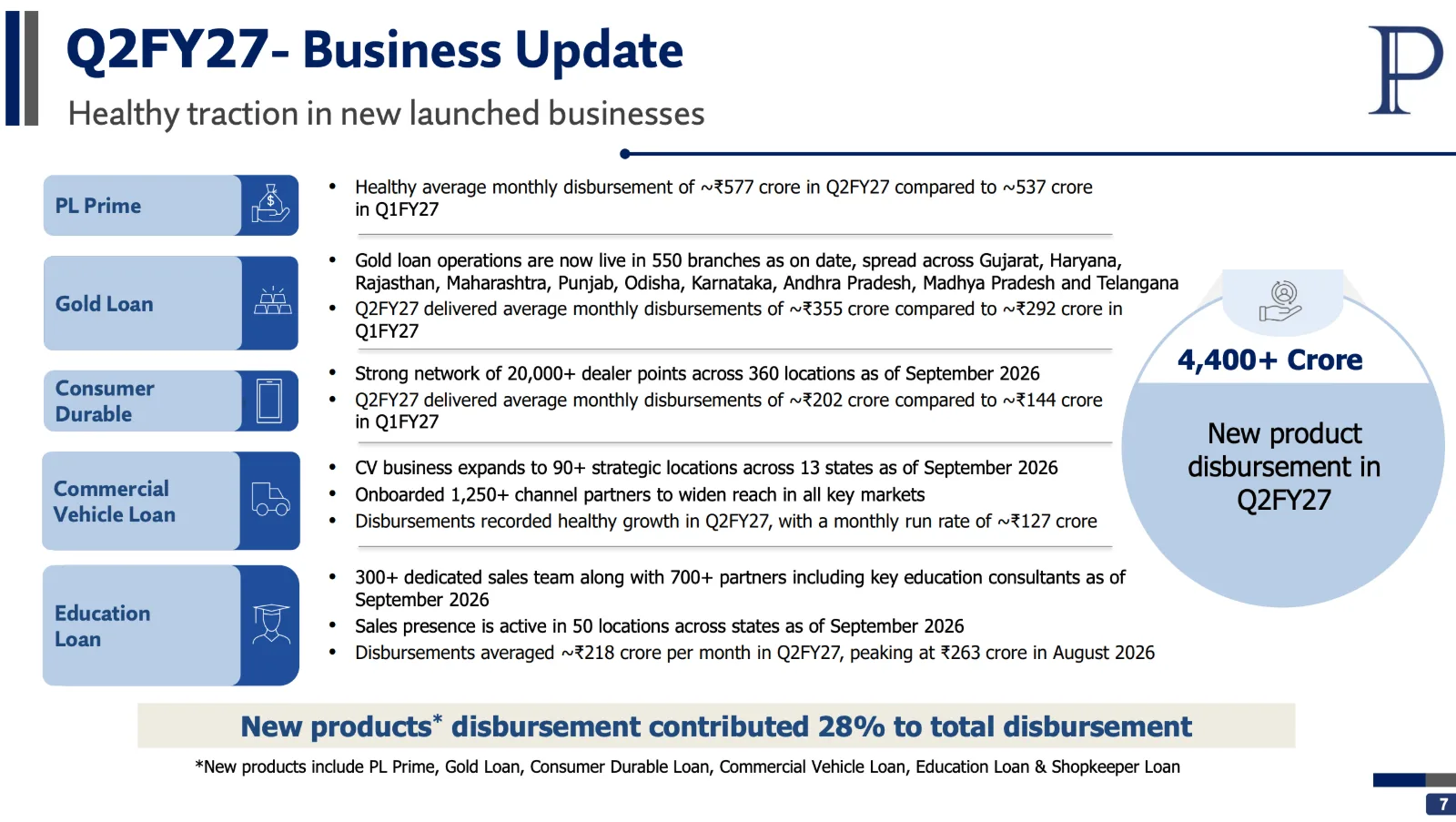
Gold loan disbursements increased to ₹1,066 crore from ₹875 crore in the previous quarter.
What caught my attention: Earnings improved alongside asset quality. The important question now is whether better credit performance and margin expansion sustain as the loan book grows.
Track next: Credit costs, GNPA, return on assets and the performance of newer lending businesses.
2. Waterways Leisure: The new ship could change the earnings equation
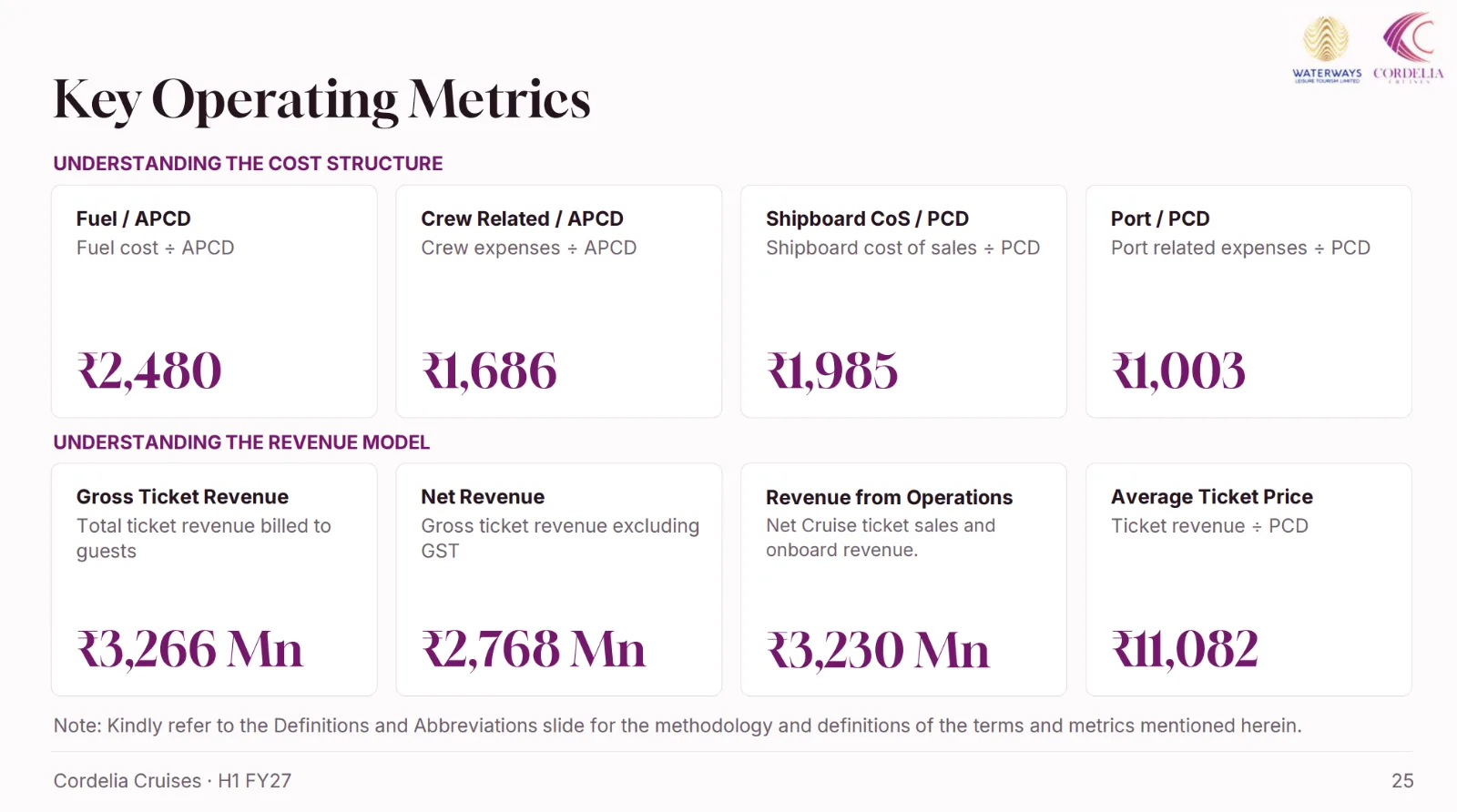
Q2 revenue grew 31% YoY to ₹132.9 crore.
Cordelia Sky arrived 21 days ahead of schedule, triggering $5.2 million in early-delivery compensation.
Fuel costs created an estimated ₹28 crore headwind during H1.
Cordelia Sky is expected to contribute revenue from H2 FY27, while Cordelia Sun is scheduled for delivery in approximately 11 months.
What caught my attention: Fleet expansion creates an opportunity to spread corporate costs across more ships. But higher fuel costs could absorb part of the operating leverage.
The real test is whether the additional capacity translates into stronger earnings and cash generation.
Track next: New-ship utilisation, fuel prices, booking trends and the delivery timeline for Cordelia Sun.
3. Canara HSBC Life Insurance: Product mix matters as much as premium growth
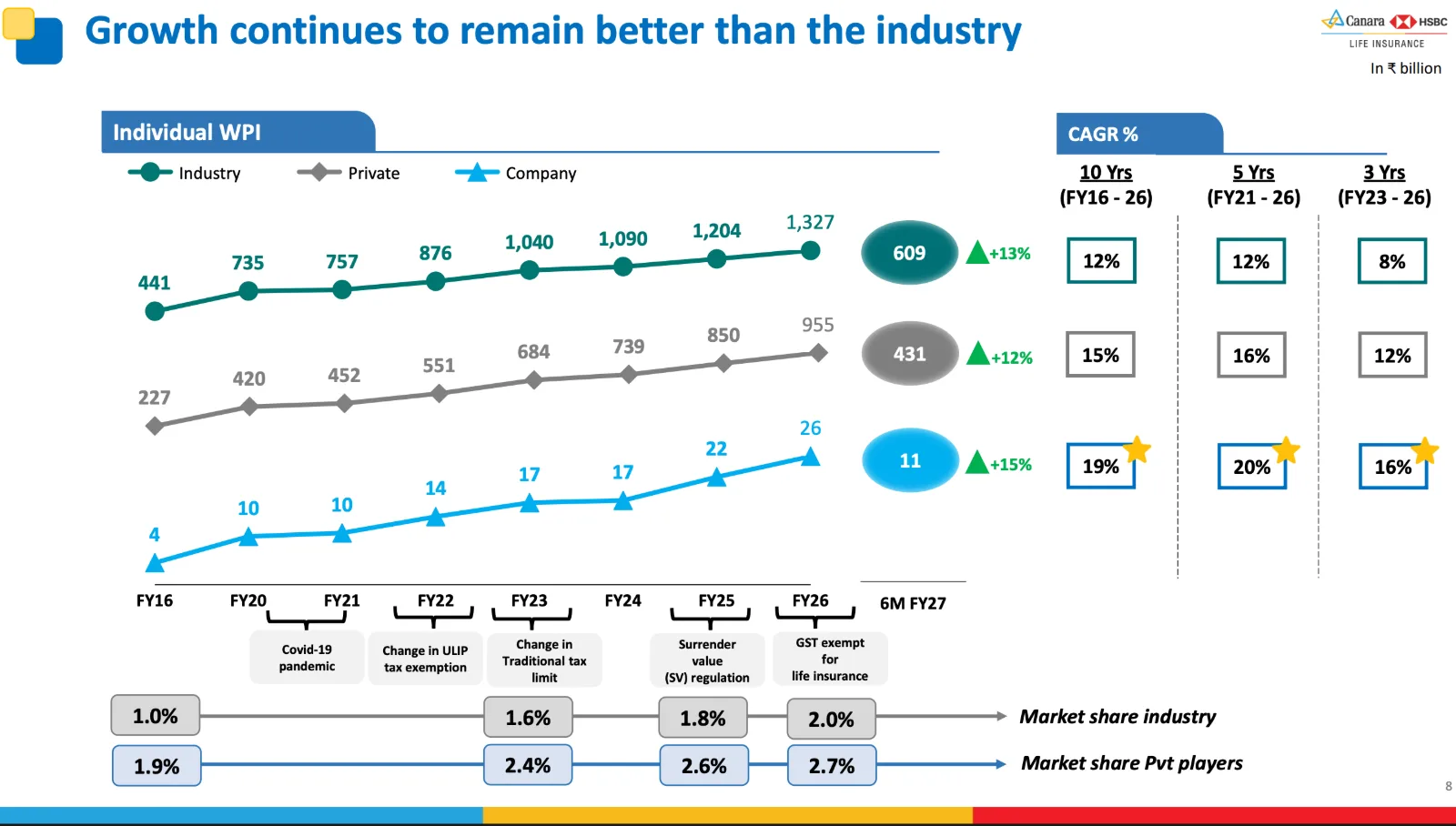
Individual weighted premium income grew 15% YoY.
Individual protection business surged 96% YoY.
VNB margin improved to 21.3% from 19.6%.
Traditional products increased to 59% of the product mix, compared with 50% a year earlier.
The solvency ratio stood at 180%, against a regulatory minimum of 150%.
What caught my attention: Premium growth is only one part of the insurance story. The shift in product mix and the improvement in VNB margin offer additional insight into the economics of new business.
The next challenge is scaling protection and distribution while maintaining profitability and capital strength.
Track next: Protection growth, VNB margins, agency productivity, persistency and the impact of the final regulatory framework.
A thought from the Bhagavad Gita
योगस्थः कुरु कर्माणि सङ्गं त्यक्त्वा धनञ्जय।
“Established in yoga, perform your actions, abandoning attachment to success and failure.”
- Bhagavad Gita 2.48
In investing, we spend a lot of time trying to predict outcomes.
Will margins expand? Will the next quarter beat expectations? Will the market recognise the opportunity?
But we have much more control over the quality of our research than over the final outcome.
Read the concalls. Question the assumptions. Track the numbers. Update your view when the facts change.
The goal isn't to be right about every prediction. It's to build a process that helps you make better decisions over time.
That's where the real edge comes from.
If you're enjoying this daily exercise of listening to management and connecting the dots, keep following along. More interviews, more concalls and more lessons to come.
See you tomorrow. 🙏
Amit
Disc: Not a Buy/Sell Recommendations.
Comments