What a company tells you about itself
Every listed company writes a lot. An annual report of two or three hundred pages. Four earnings calls a year, each an hour of management talking. Results, presentations, exchange filings. It is all public, and it is the best source there is, because it is the company on the record.
The catch is the reading. The four questions an investor actually has, what does this company do, what could make it grow, does management deliver what it promises, and can the accounts be trusted, are each answered somewhere in that pile. Finding the answers is a weekend of work per company.
What the reports are
Open any company page and press SOIC x StockScans Reports under the price. A small panel opens with the four reports.
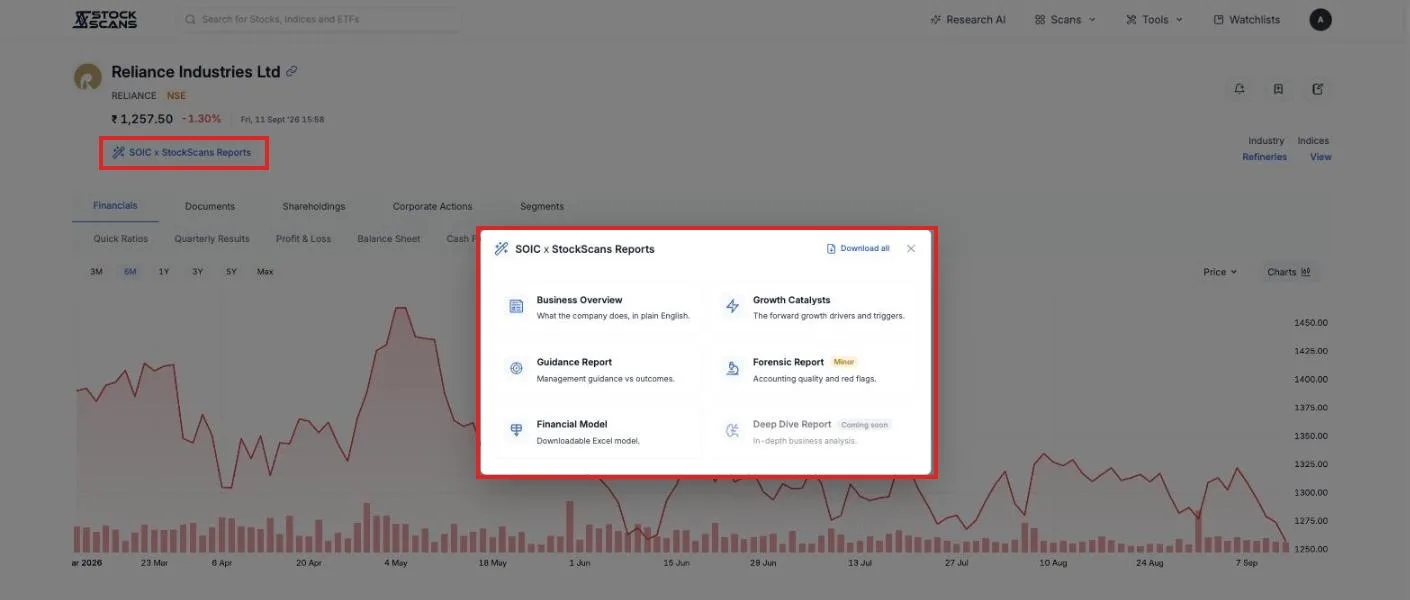
Each one is written from the company's own documents, one report per question. They open in a window over the page, with a date at the top showing when they were last updated, and each can be saved as a PDF.
Business Overview: what does this company do
The first question, and the one most people skip. The Business Overview answers it in plain English: what the company sells, to whom, how it makes money, how the pieces fit together, and who its partners and subsidiaries are.
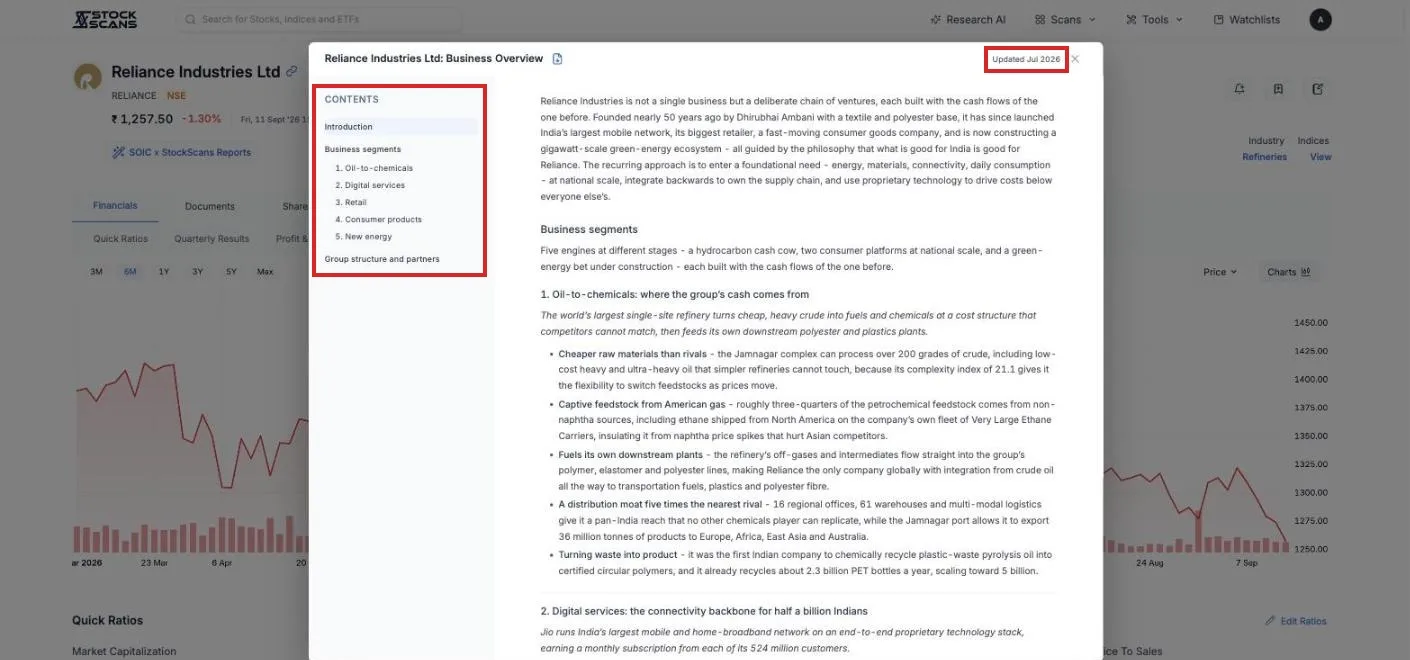
It is organised by segment, so a conglomerate reads as five short chapters rather than one blur. Each segment opens with a one-line summary in italics and then a handful of bold-led points, each one a specific fact with a number attached.
Read this one first, before the numbers. A revenue growth figure means nothing until you know what the revenue is.
Growth Catalysts: what could make it grow
Management spends a good part of every earnings call describing what comes next. A new plant, a listing, a product, a market. Growth Catalysts collects those into a numbered list, each with a bold label and the facts behind it: the size, the timeline, the figures management has quoted.
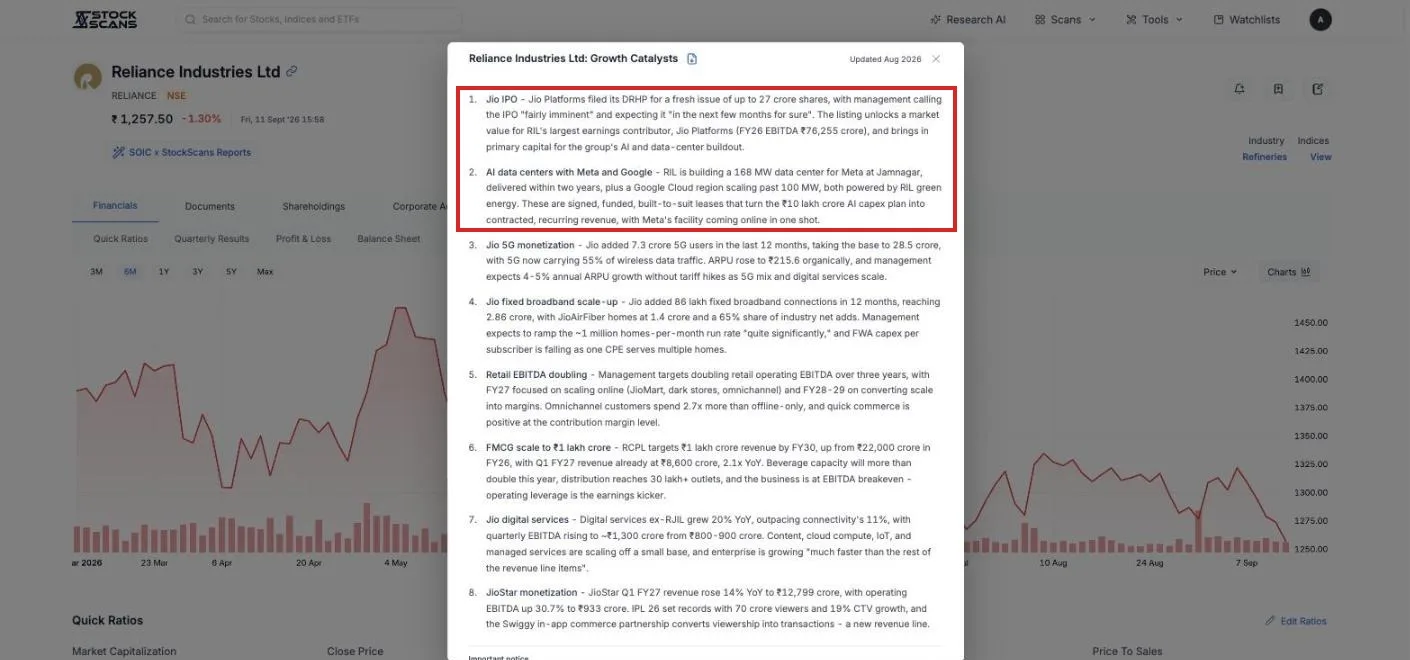
These are drawn from what management said, not predictions. The report says so at the bottom. What it gives you is the list to check against, quarter after quarter: is the plant on time, did the listing happen, did the number grow.
Guidance Report: does management keep its word
This is the one that separates companies. Every quarter, management guides: margins will recover, capacity will double, the new business will break even by March. Most investors forget the promise by the time the answer arrives.
The Guidance Report keeps the list. Each item is a specific commitment management made, with when they made it, and a status chip: Delivered, On track, Partial, Pending or Missed. Under it, what was promised and what was subsequently reported, in a few lines.
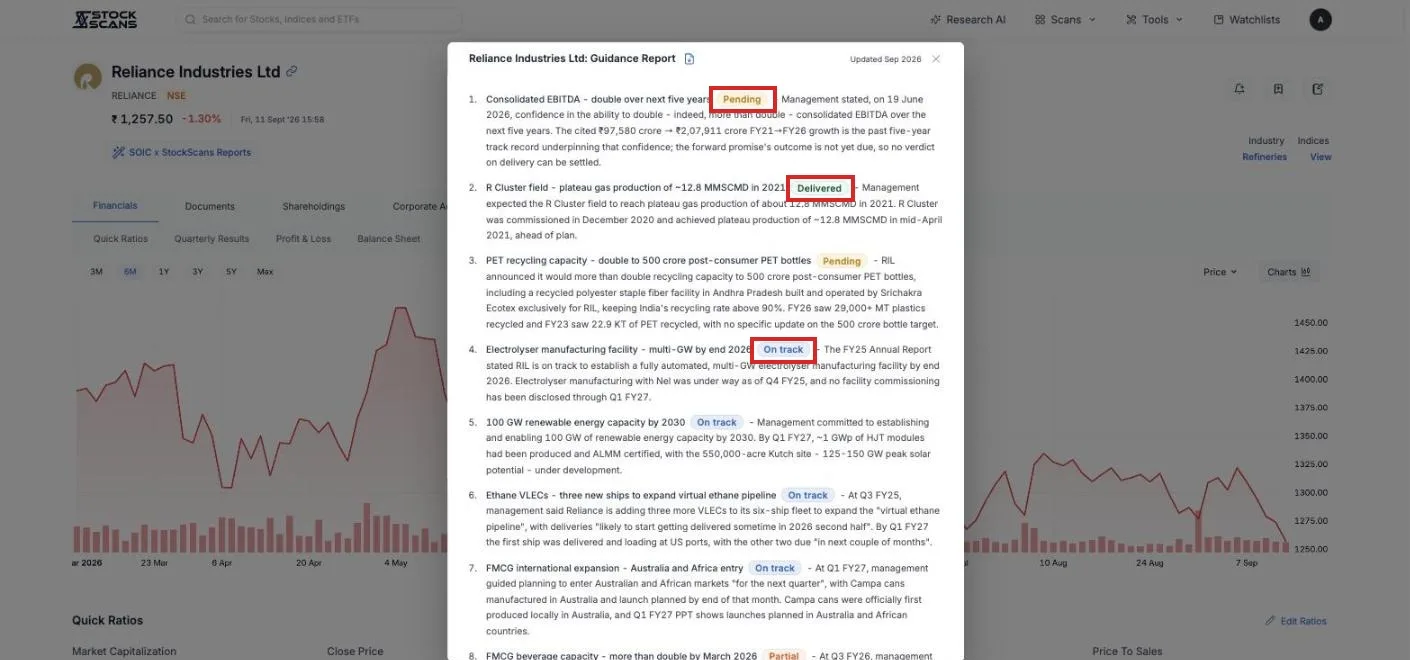
Read the Missed and Partial items first. One missed promise is business. A pattern of them, quarter after quarter, is a management team that says more than it does, and you will see it here long before it shows in the price.
Forensic Report: can the accounts be trusted
Every year a handful of companies turn out to have been reporting numbers that were not quite real. The signs were usually in the annual report all along: related-party dealings, auditor changes, cash that never matched profit.
The Forensic Report reads every annual report on file, and ten years of financials, for those signs. It opens with a scorecard: an overall score out of ten, and four category scores for earnings quality, balance sheet integrity, promoter governance and related-party transactions, and audit structure and disclosure. Above it sits a chip: Clean, Minor, Major or Critical. The same chip appears on the report's tile in the panel, so you see it before you open anything.
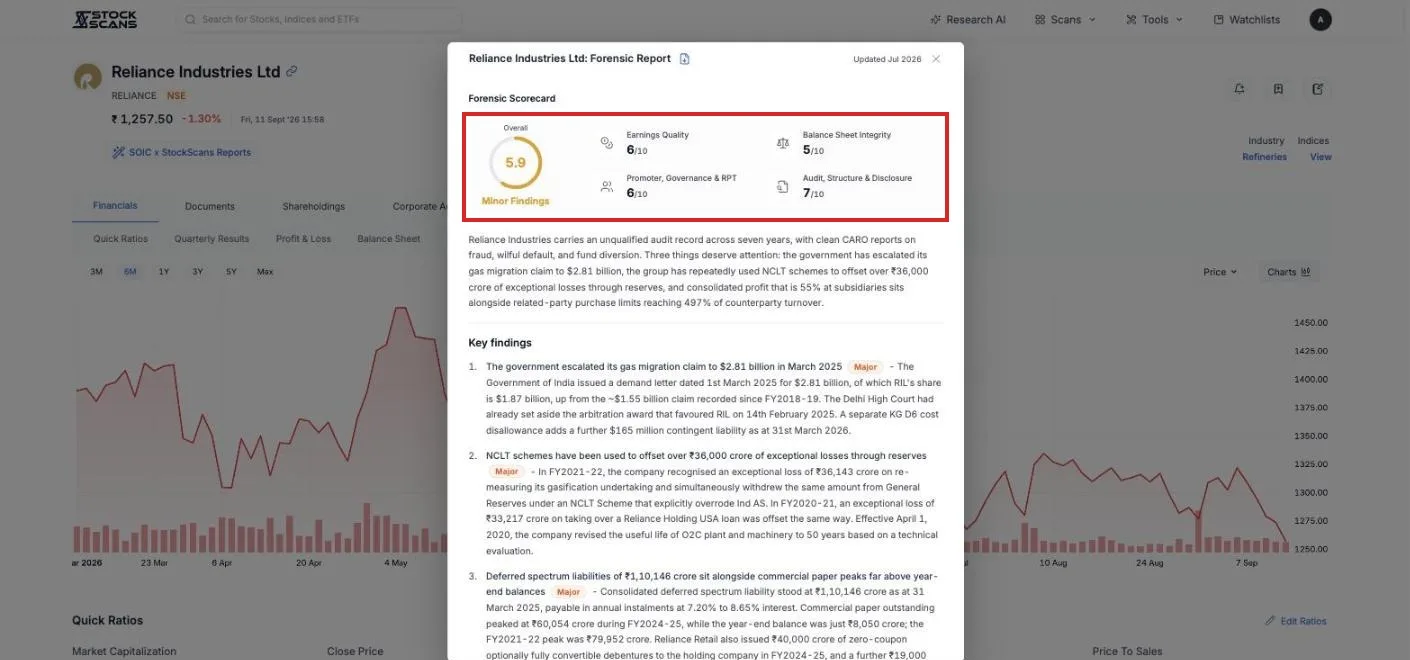
Then the key findings, each with its own severity and the facts from the filings that support it. Then What to watch, the specific upcoming events that would settle each question. Then a bottom line in a paragraph.
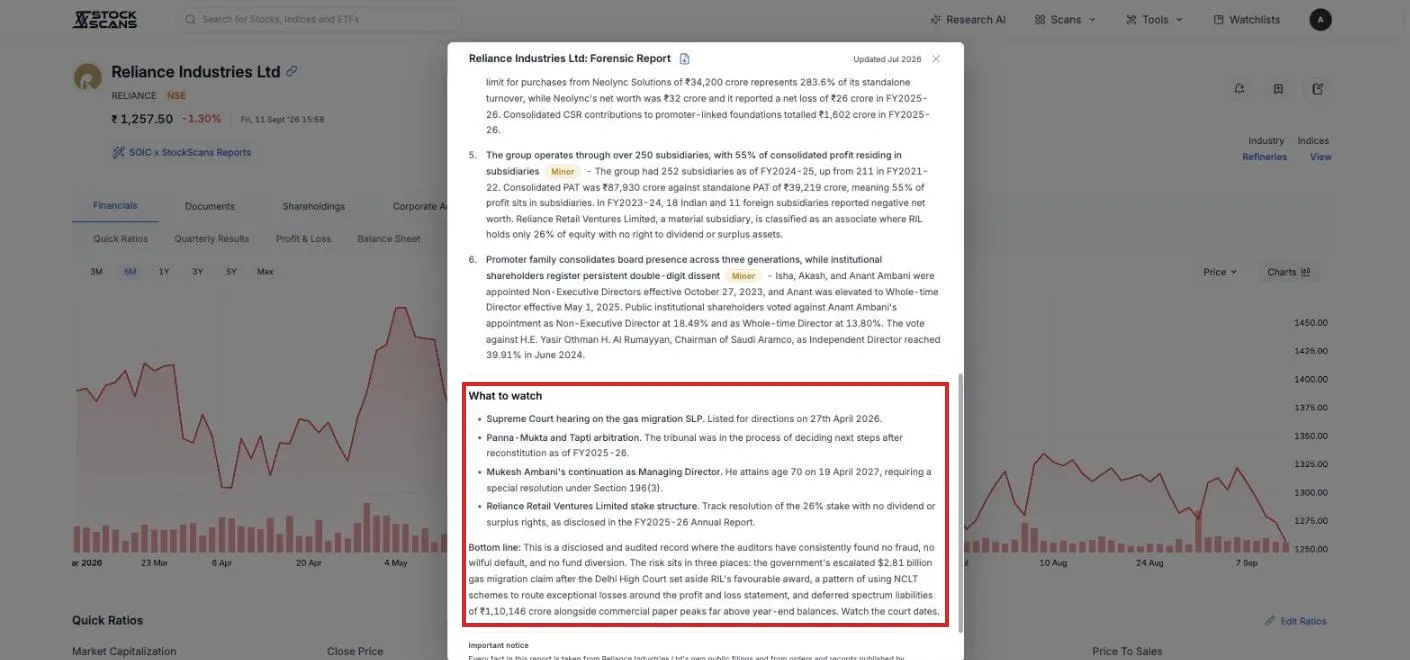
Two things to hold on to. A Minor chip on a large, complicated company is normal. Big groups have many subsidiaries and related parties, and the report will say so. And the report is careful to describe its findings as opinions on disclosure quality, not accusations. Read the notice at the bottom once. It is there for a reason.
Which companies, and how fresh
Reports exist for a few thousand companies, starting from the largest by market cap and working down. A very small company, or one that holds no earnings calls, may have the Business Overview and Forensic Report but not the other two. The panel greys out any report it does not have.
The date at the top of each report is the honest answer to "how fresh". Growth Catalysts and the Guidance Report are refreshed after each results season, once the company's earnings call is in. The Forensic Report is built from the annual report, so it refreshes when the new one is published. The Business Overview deliberately carries no financial figures, so it does not go stale with each quarter.
Where they turn up elsewhere
Three of these, the Business Overview, Growth Catalysts and Forensic Report, are written for every IPO from its prospectus, before the listing, on the IPO Scans page. And the panel on the company page carries two more items: a Financial Model, the company's statements as a downloadable spreadsheet, and a Deep Dive Report for the companies that have one.
What is free
Business Overview, on every company page, no account needed.
Growth Catalysts, Guidance Report and Forensic Report, with a free account, and the PDF downloads.
There is no monthly cap on the reports and no paid tier for them. Log in and read.
A twenty-minute routine for any company
Minutes one to five. Business Overview. Read the segment summaries in italics, skip the rest.
Minutes five to ten. Forensic Report. The scorecard, then any Major finding. If there is a Critical, stop here and think.
Minutes ten to fifteen. Guidance Report. Count the Missed and Partial items against the Delivered ones.
Minutes fifteen to twenty. Growth Catalysts. Pick the two that would matter most, and note when they are due.
The company already wrote it all down. Now it is in four pages.
Comments