

This week, I was travelling and got very little time to actively track the markets. But the travel gave me something I usually struggle to find, ample time to read.
I spent some time going through a few concalls and also re-reading How to Make Money in Stocks by William O’Neil.
While reading the concalls, I specifically wanted to look at recently listed companies and their first few earnings calls to understand the business better, hear what management is saying, and see what they are focusing on after listing.
I went through quite a few calls and found 5 that I thought were particularly interesting and worth sharing with you.
Along with these, I’ve also picked out 2 interesting insights from Mark Minervini's book that caught my attention during my re-read.
So, this week’s reading list is a mix of 5 concalls + 2 lessons from Book.
Let’s get into it. 👇
1. Manipal Health Enterprises
Why read?
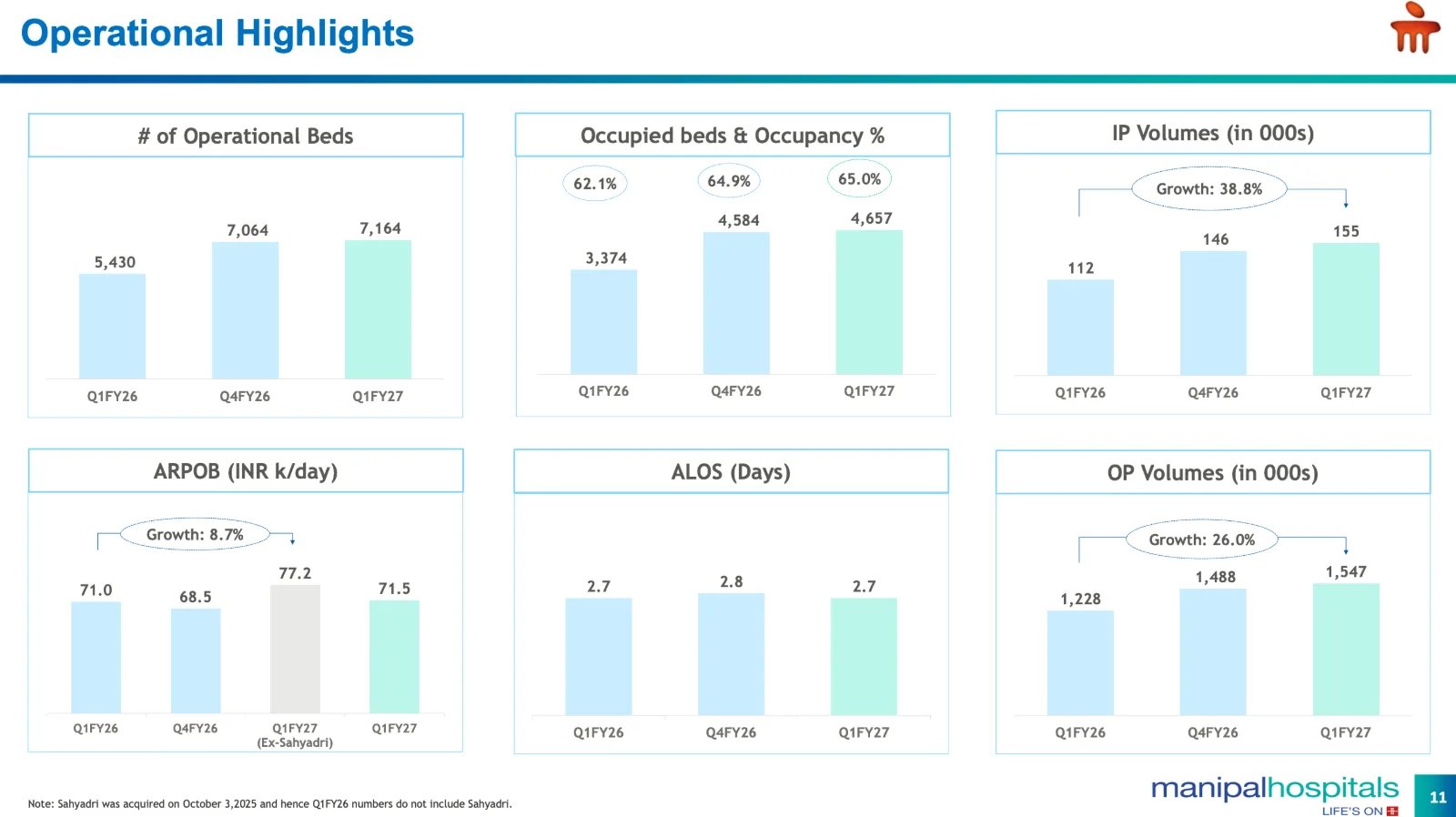
Manipal reported 38% YoY revenue growth, with IP volumes up 39%, OP volumes up 26% and occupancy at 65%. ALOS remained at 2.7 days.
The interesting part is the commentary behind these numbers: patient volumes, case complexity, new hospital ramp-up and the Sahyadri integration.
Key pointers
Centres of Excellence contributed ~65% of revenue, with IP revenue from these specialties up 45%.
Sahyadri revenue grew 13% and EBITDA 19%. ARPOB increased 15% and ALOS fell to 2.8 days.
Kanakapura reached EBITDA break-even in its fifth month and Yelahanka in its second month.
The 50th hospital was launched in Bangalore, adding ~300 beds.
What to learn
When analysing hospitals, don't stop at ARPOB.
Look at:
Occupancy + ALOS + case mix + ARPOB + margins
Management said ALOS has come down from around 4.2–4.3 days historically, helped by better discharge processes and operating efficiencies.
That gives the same bed more throughput.
Industry perspective
For hospitals, growth can come from three places:
More beds → Better utilisation → Better case mix
Manipal currently has all three moving together, with additional capacity coming through greenfields, brownfields and acquisitions.
What to track
Occupancy
ALOS
ARPOB
Case mix
New hospital ramp-up & Sahyadri margins
Sahyadri is particularly important. Management is working through a 16–18 month integration process, focused on clinical talent, case complexity, conversion efficiency, digital adoption and infrastructure.
This is one concall where the operating metrics tell you more than the headline revenue growth.
2. MV Electrosystems
Why read?
MV Electrosystems is now moving from product approval to large-scale execution.
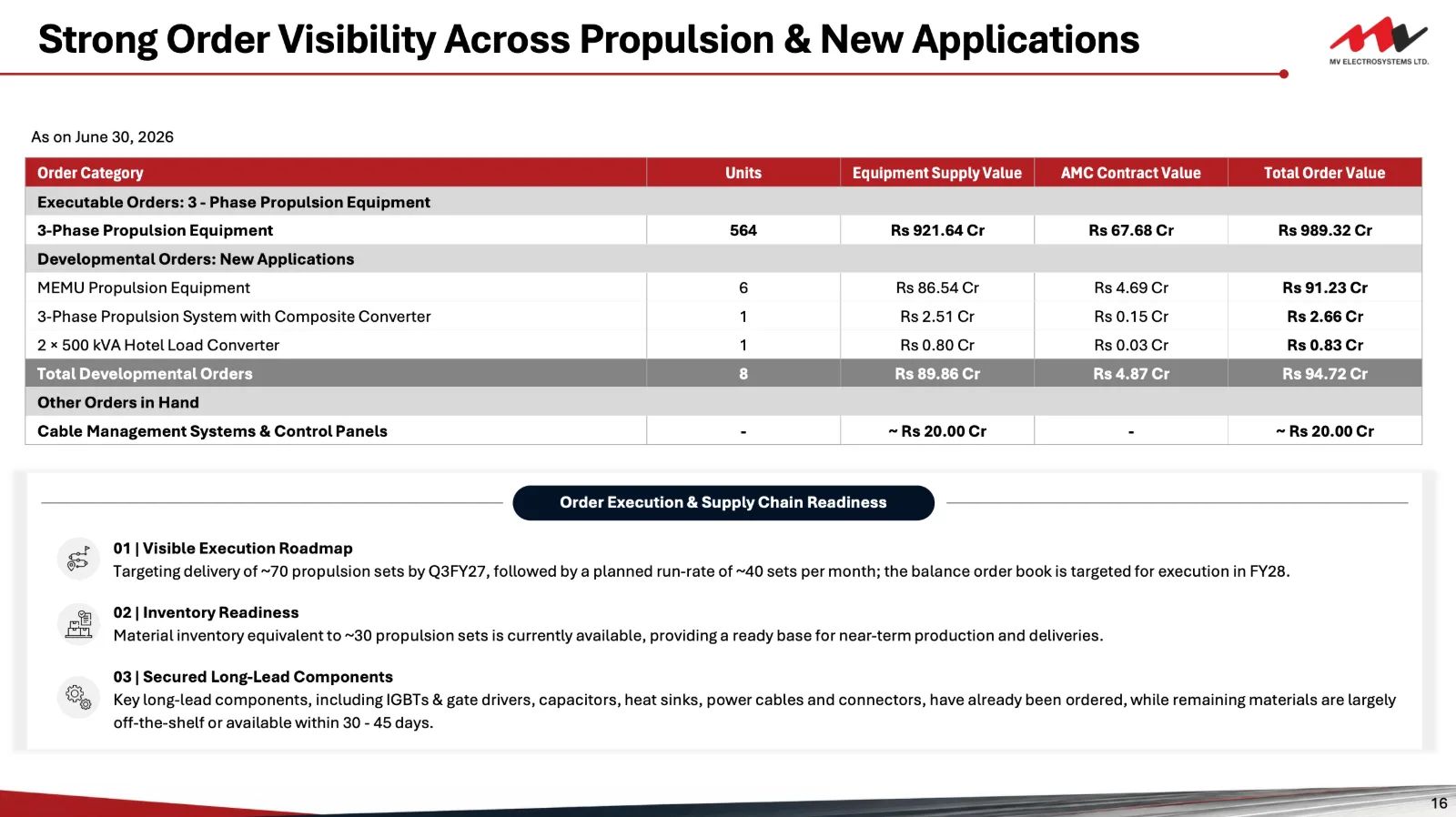
The company has an order book of ₹1,000+ crore, including ~₹989 crore of locomotive propulsion orders and an ₹86 crore EMU development order. Management expects production to move from 10 propulsion systems in September → 25 in November → 40 per month from January.
That makes the next few quarters more about execution, capacity utilisation and margins.
Key pointers
FY27 revenue target: ₹400 crore.
At the planned run-rate, management expects 10%+ PAT margin.
Current capacity can support up to 55 propulsion systems/month, but management plans to operate around 40 initially.
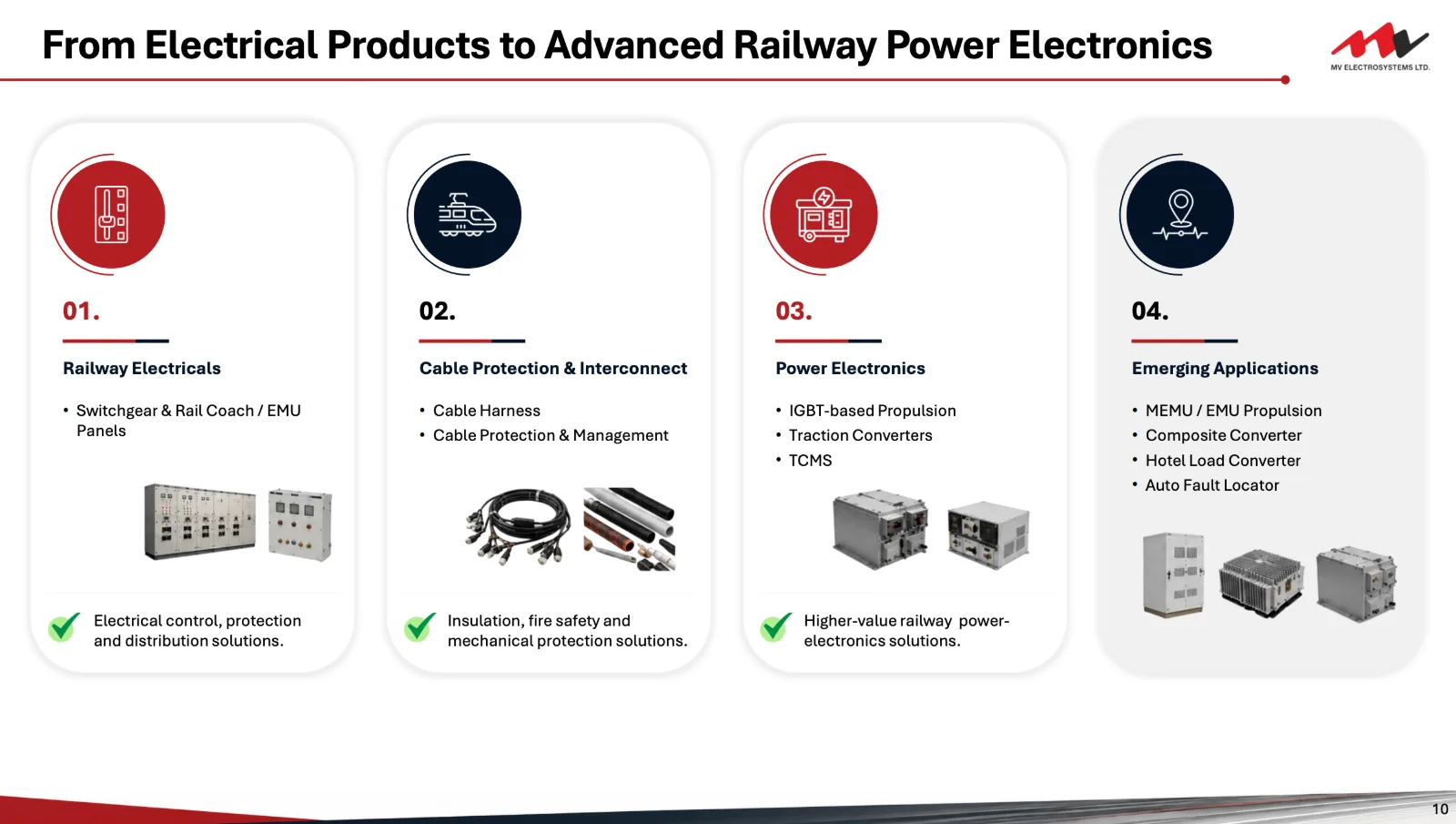
EMU propulsion is being developed in-house, with approval expected after the development phase.
The company is also building an OHE platform, including automatic fault locator systems through its partnership with PNC Technologies.
What to learn
For a railway technology company, order book alone isn't enough.
The key transition to watch is:
Approval → Production → Delivery → Revenue → Margin
The company says the initial months of scale-up will carry lower margins, with profitability expected to improve as production reaches the targeted run-rate.
Industry perspective
The interesting part is the technology and approval cycle.
Propulsion systems are safety-critical and require RDSO approval. MV is currently expanding from locomotive propulsion into EMU/MEMU and eventually other distributed-power applications. Management expects EMUs to become a significant opportunity over the coming decade and is developing the platform with its own IPR.
The OHE opportunity is another leg to watch, with management discussing automatic fault locators being deployed across electrified railway infrastructure over the next 5–7 years.
What to track
Monthly production
Order execution
EMU approval
OHE orders
Working capital
The biggest thing to watch now is simple:
Can the company move from a ₹1,000+ crore order book to the 40-systems/month execution rate without stretching working capital or sacrificing margins?
3. Dhoot Transmission Ltd
Why read?
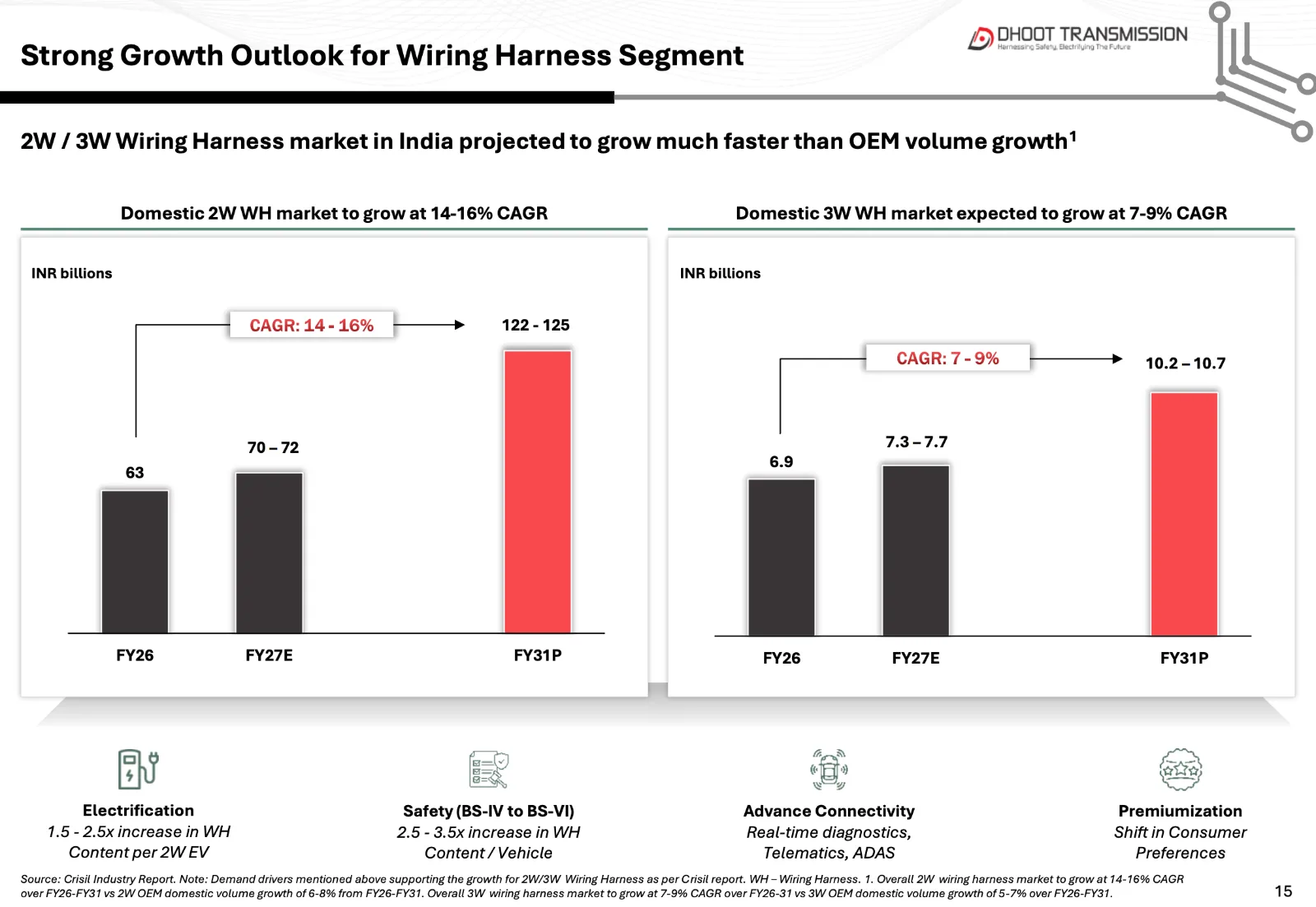
Dhoot Transmission has reported a strong first quarter after listing, with group transmission revenue growing nearly 50% YoY. Wiring harness revenue grew 44.6%, non-wiring harness revenue 67.7%, while EV revenue grew 79% and now contributes 27% of total revenue, versus 24% last year.
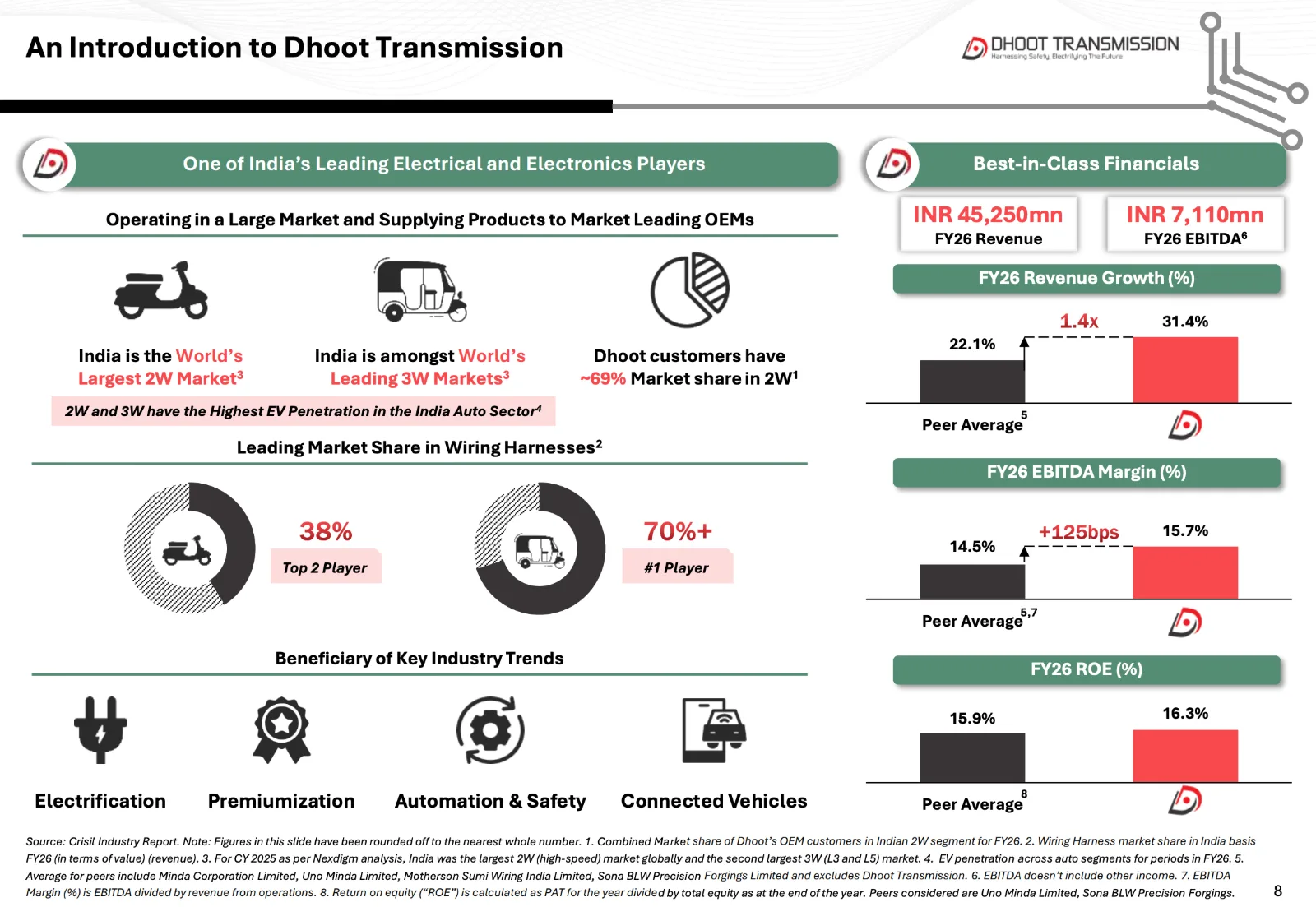
Management is targeting 25–30% overall growth for FY27, while maintaining a full-year EBITDA margin indication of 15–16%.
Key pointers
Q1 wiring harness revenue: ₹1,090 crore
Q1 non-wiring harness revenue: ₹358 crore
EV contribution: 27% of revenue
EV revenue growth: 79% YoY
EBITDA margin: 15%, up 110 bps sequentially
Management FY27 growth indication: 25–30%
Full-year EBITDA margin indication: 15–16%
The bigger story: EV content
Dhoot isn't limited to wiring harnesses. Its EV offering includes battery-pack assembly, controllers, sensors, switches, charging guns, chargers and other EV components. Management indicated that wiring-harness content alone can be around 1.5–2.5× ICE, while the total content opportunity can be substantially higher when multiple products are supplied.
Management expects EV revenue contribution to potentially exceed 32% within the next 2–3 years, depending on EV penetration.
Multilink acquisition
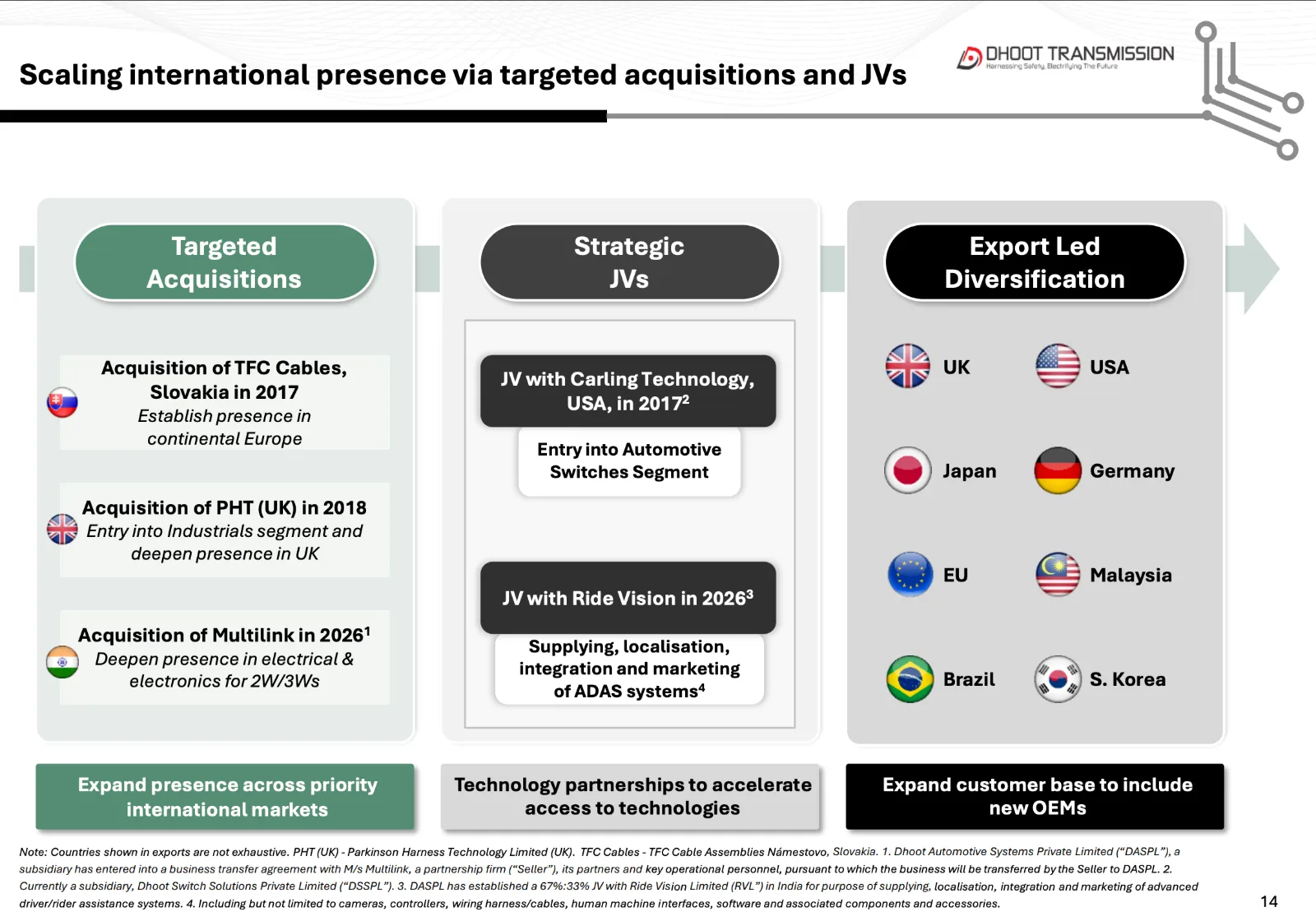
Multilink is being integrated into the business over the next 3–4 months. The acquisition brings Hero as a customer and products such as fuel-level sensors and relays, creating cross-selling opportunities across Dhoot's existing customer base.
Management indicated that Multilink could potentially grow 25–30%, with margins expected to be broadly in line with the existing business.
New optionality
The company is also developing:
Ride Vision JV → 2W ADAS
The JV is focused initially on two-wheelers, particularly systems addressing blind spots and collision-related risks. Management said there is interest from major two-wheeler customers, although broader adoption is linked partly to future regulation and customer decisions.
There is also an advanced-stage JV discussion around passenger-vehicle high-voltage harnesses, with more details expected in a subsequent earnings call.
Capacity
Two plants Jhajjar and Hosur are being expanded, which management expects to add roughly 15–20% capacity during FY27. The company maintains around 75% utilisation through the year because customers can require close to 100% capacity during peak periods.
What to track
EV revenue mix
Wiring-harness growth
Multilink integration
15–16% margin delivery
Copper prices/pass-through
EV battery-pack customers
The key transition here is:
ICE wiring harness → EV wiring harness → EV components → broader automotive electronics
4. Millworks Technologies
Why read?
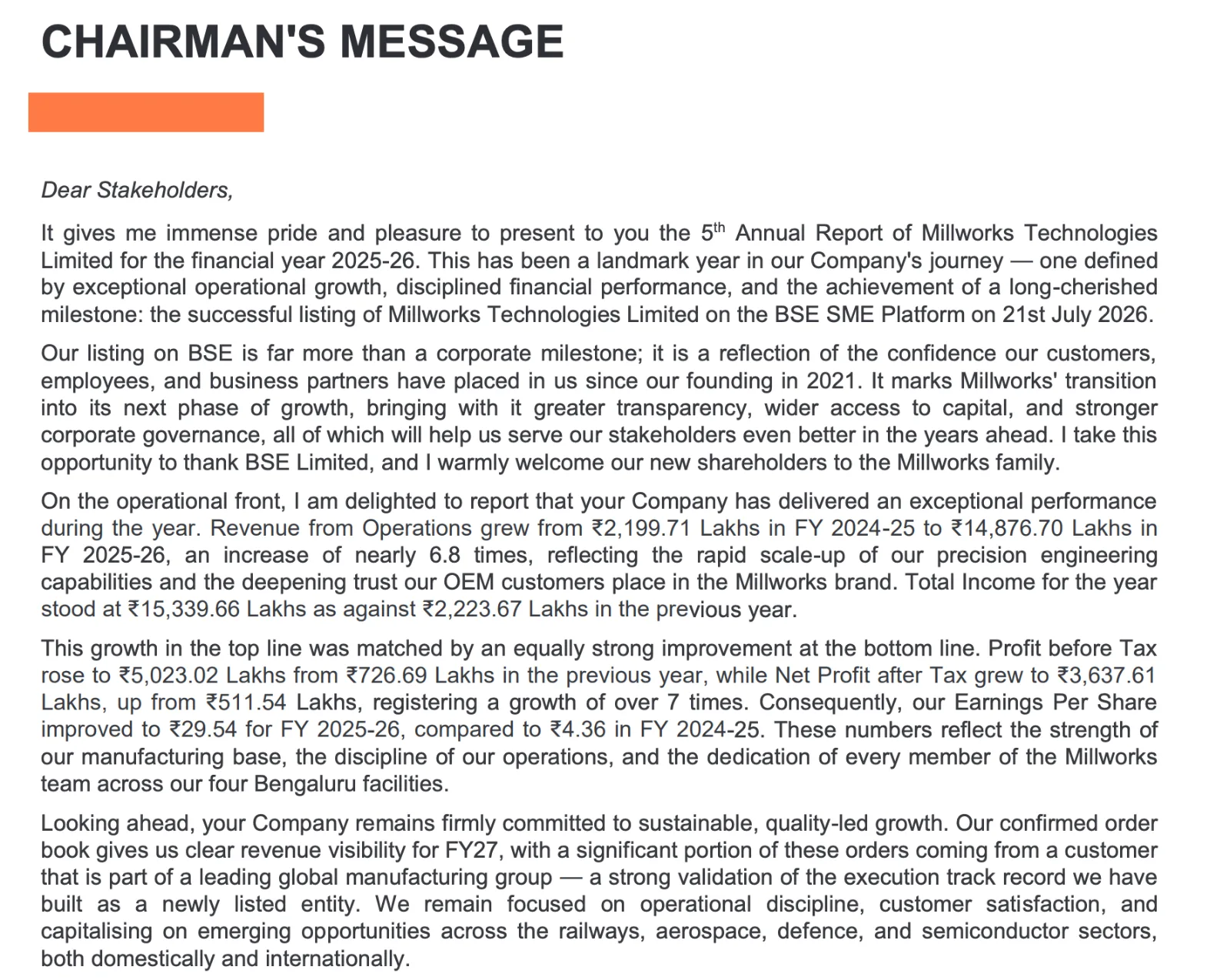
Millworks is in the middle of a major capacity expansion, with 37 new machines being added. 17 have already arrived, and management expects installation to be completed by November/December. The expanded setup is expected to take peak capacity to around ₹300 crore.
At the same time, the company has a ₹143 crore confirmed order book, with more than 50% coming from defence, plus another ~₹50 crore of potential orders expected over the next 30–45 days.
Key pointers
Current utilisation: 78–80%
Order book: ₹143 crore
>50% of order book from defence
Another ₹50 crore order visibility in 30–45 days
37 machines being added
Peak capacity after expansion: ~₹300 crore
Management is targeting 50–60%+ growth
Vidwan Aerospace acquisition adds IC engine manufacturing capability for UAVs.
What to learn
This is a good example of why order book and capacity have to be read together.
Millworks is already running at ~80% utilisation. The new machines aren't simply speculative capex — management says they are being added against existing orders and expected requirements.
The other interesting point is build-to-print vs build-to-spec.
Currently, the mix is roughly 70% build-to-print / 30% build-to-spec. Build-to-spec carries slightly higher margins, but takes much longer to move from prototype to production. Management wants to gradually move toward a 50:50 mix.
Industry perspective
Precision engineering for aerospace and defence is ultimately a qualification + capability + execution business.
The company is moving deeper into higher-precision components, adding 5-axis machines and building capabilities such as special processing and eventually Nadcap certification for aerospace requirements.
The Vidwan acquisition adds another piece: two-stroke and four-stroke IC engines for UAVs. Meanwhile, Millworks is building capabilities around drones, electronic warfare and related defence systems.
One thing to watch closely: Working capital.
Government defence orders can have an 8–10 month cash cycle, compared with roughly 90–120 days for exports. Management explicitly said it needs to balance Indian government orders with export business as the defence mix increases.
What to track
Machine commissioning
₹143 crore order execution
Build-to-spec mix
Vidwan integration
UAV/engine orders
For Millworks, the next phase is essentially:
Orders → Capacity → Execution → Cash flow
5. Tempsens Instruments (India) Ltd
Why read?
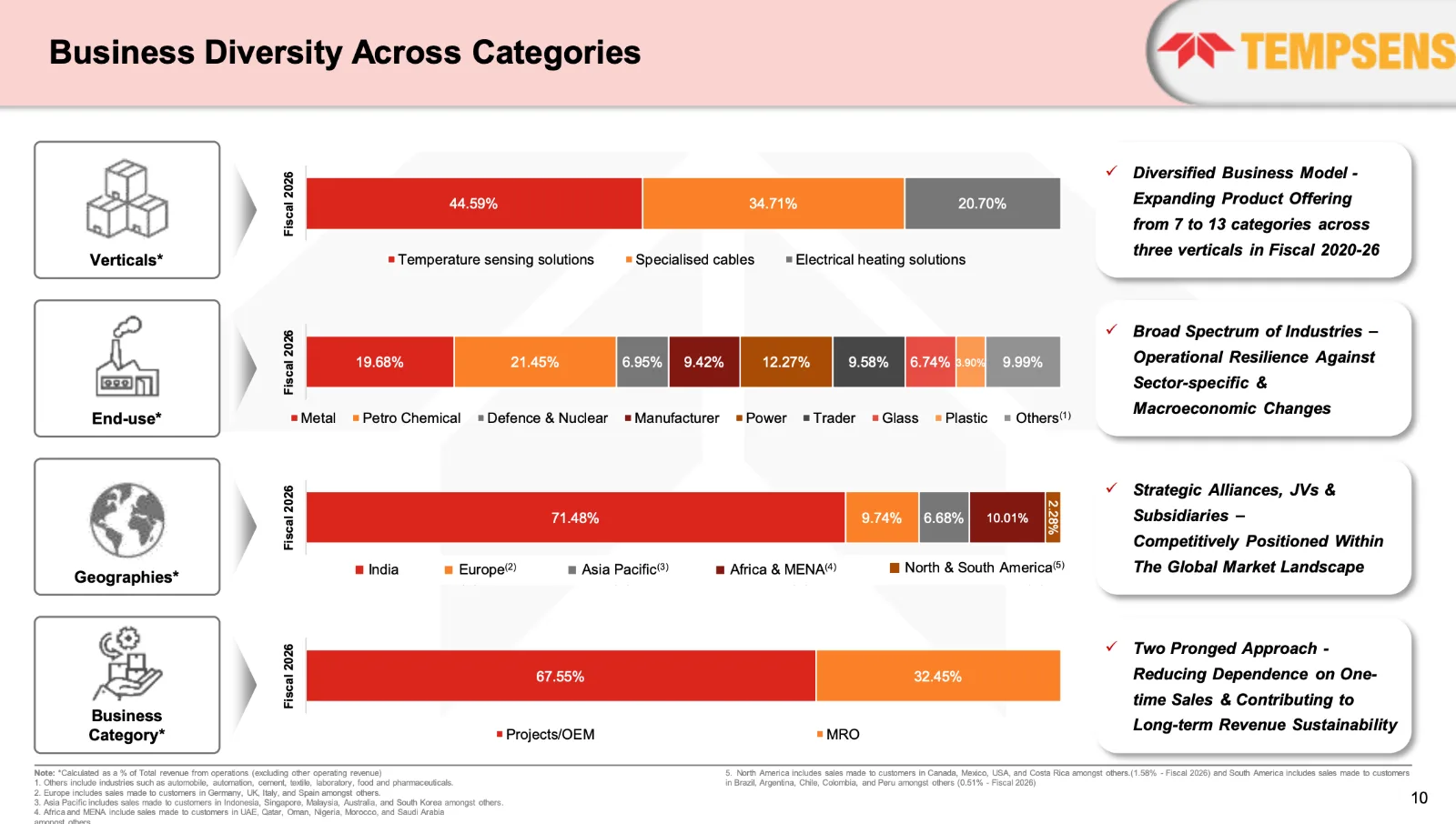
Tempsens is an engineered, made-to-order business where its products are a small part of a customer's overall plant cost but are critical for safety, efficiency and process control. Management says roughly 75–90% of revenue comes from critical applications, where vendor approvals, certifications and proven track records create a meaningful qualification cycle.
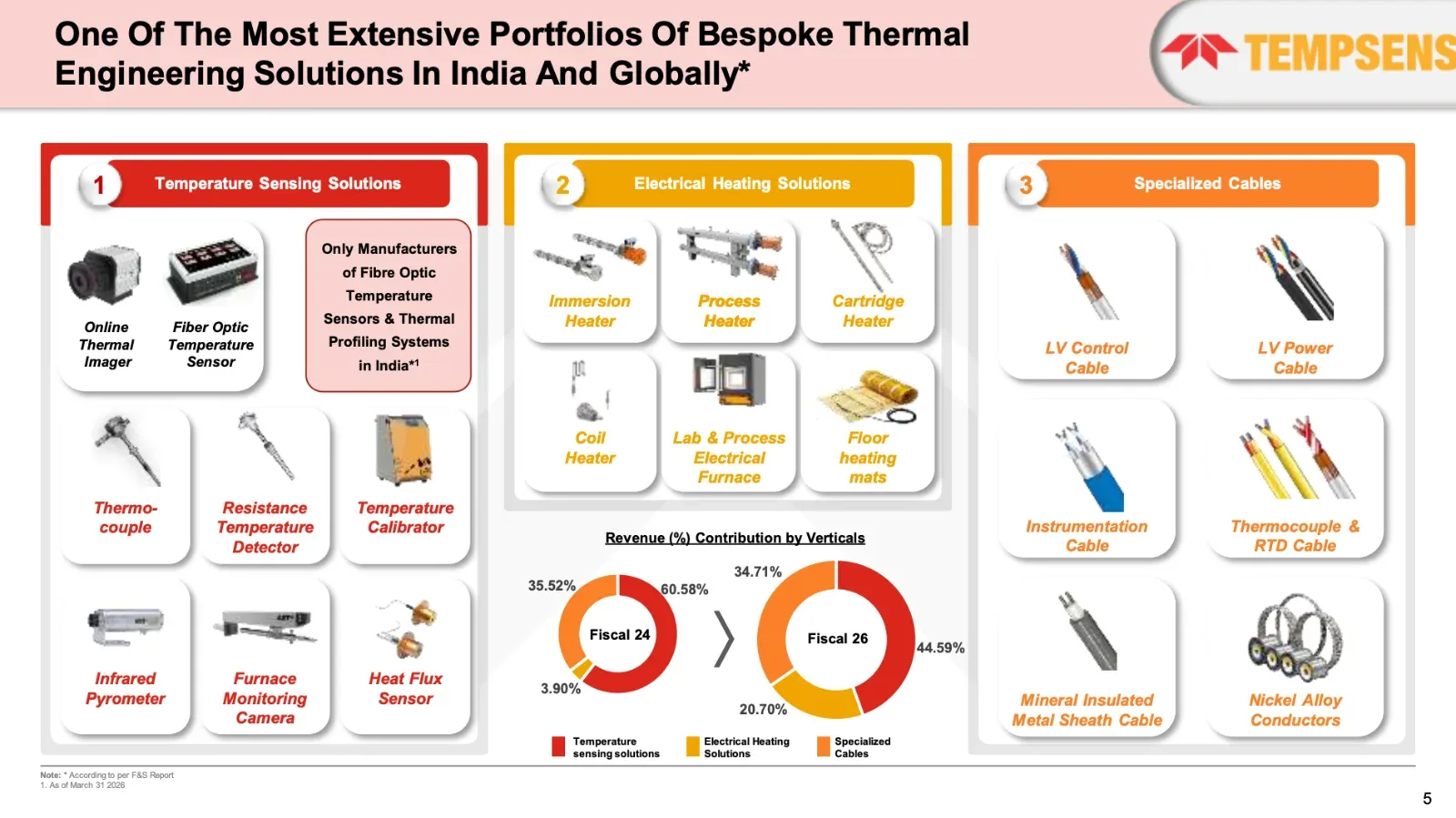
The Q1 story is also about capacity being built ahead of demand. Management said revenue was up 30%+, exports were close to 80%+, heating more than doubled, while profit grew 16% as the company invested ahead of growth.
Key pointers
Existing capacity utilisation: ~80%
~30% of business comes from replacement
Typical heavy-industry order visibility: 4–4.5 months
Inventory: ₹110–120 crore, with 65–70% in raw materials
New capacity expected to add around ₹500 crore of revenue
Projects begin coming online from Q1 FY28
Management broadly expects full utilisation over the following few years
New-age businesses expected to grow at double-digit / high-20s to 30% levels over the next 2–3 years.
The interesting transition is from being primarily a heavy-industry temperature-sensing company toward supplying engineered products into newer applications.
Management highlighted opportunities across:
Fuel cells → battery manufacturing → semiconductors → energy storage → decarbonisation
For fuel cells specifically, Tempsens is supplying temperature sensors because fuel cells need to operate within a tight temperature range. The company is already at advanced field-trial stages and is now focused on scaling execution.
The moat
This isn't necessarily a commodity sensor business.
For critical applications, customers require certifications, vendor approvals, manufacturing capability and a proven track record. Management said the first approval can take 3–5 years, while subsequent product approvals with an existing customer can be comparatively easier.
Once qualified with an OEM, the product can also become relatively sticky because it gets built into the customer's specification and machine setup.
Capacity + margin setup
The company is investing ahead of demand, which is currently affecting employee costs and profitability. Management expects margin recovery during the second half of FY27 as the additional revenue absorbs these costs.
The new capacity is expected to start coming online from Q1 FY28, with construction largely progressing through FY28. Management expects historical growth rates to remain sustainable as these capacities ramp up.
What to track
New capacity commissioning
Fuel-cell execution
New-age industry contribution
Export growth
Replacement business
OEM qualification
The key framework for Tempsens is:
Qualification → New applications → Capacity → Revenue absorption → Margin recovery
Now, Let's look at what i learnt from book reading this week
I spent some time re-reading Mark Minervini’s Trade Like a Stock Market Wizard this week.
Here are 2 insights from Chapter 4 “Value Comes at a Price” that really stood out to me.
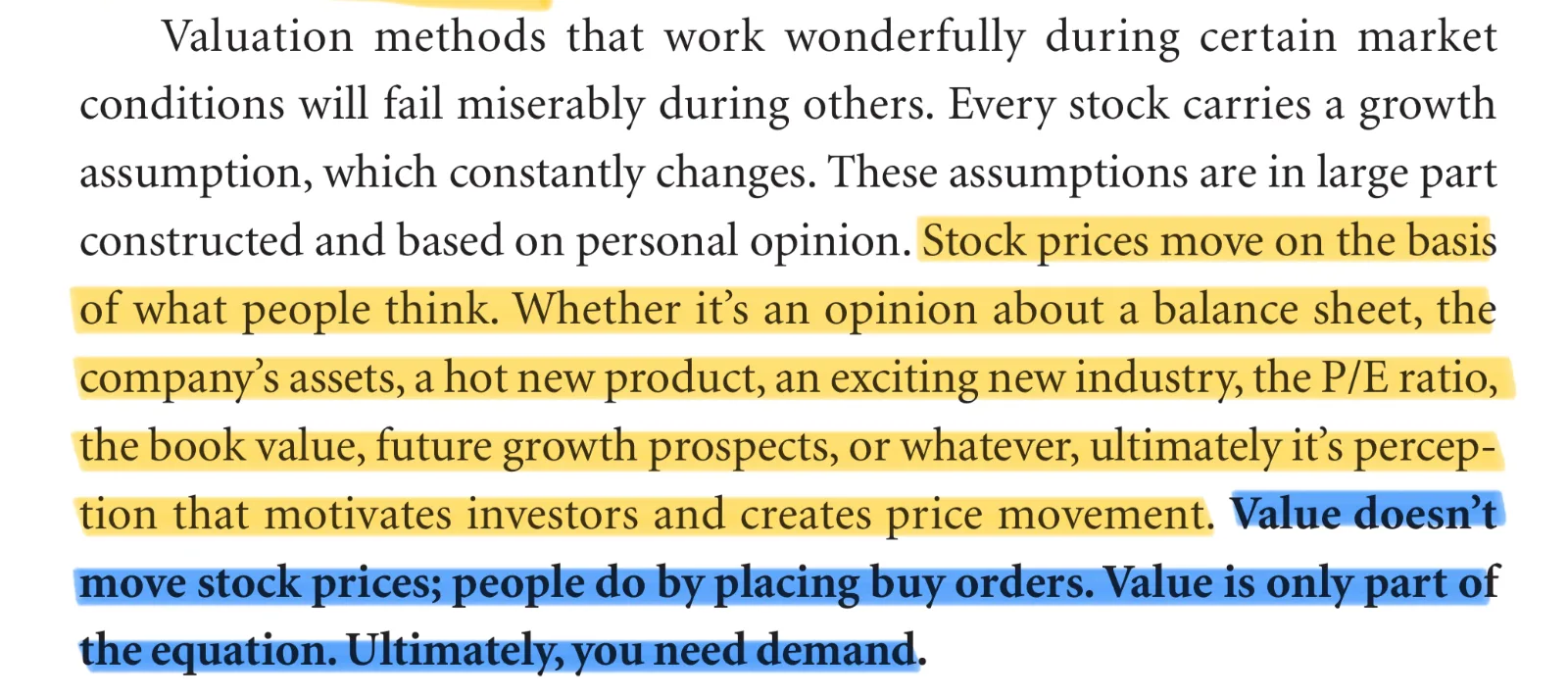
1. Value alone doesn’t move stock prices.
A cheap valuation means little if there is no demand. What ultimately moves prices is what investors believe about the company’s future and that belief creates buying pressure.
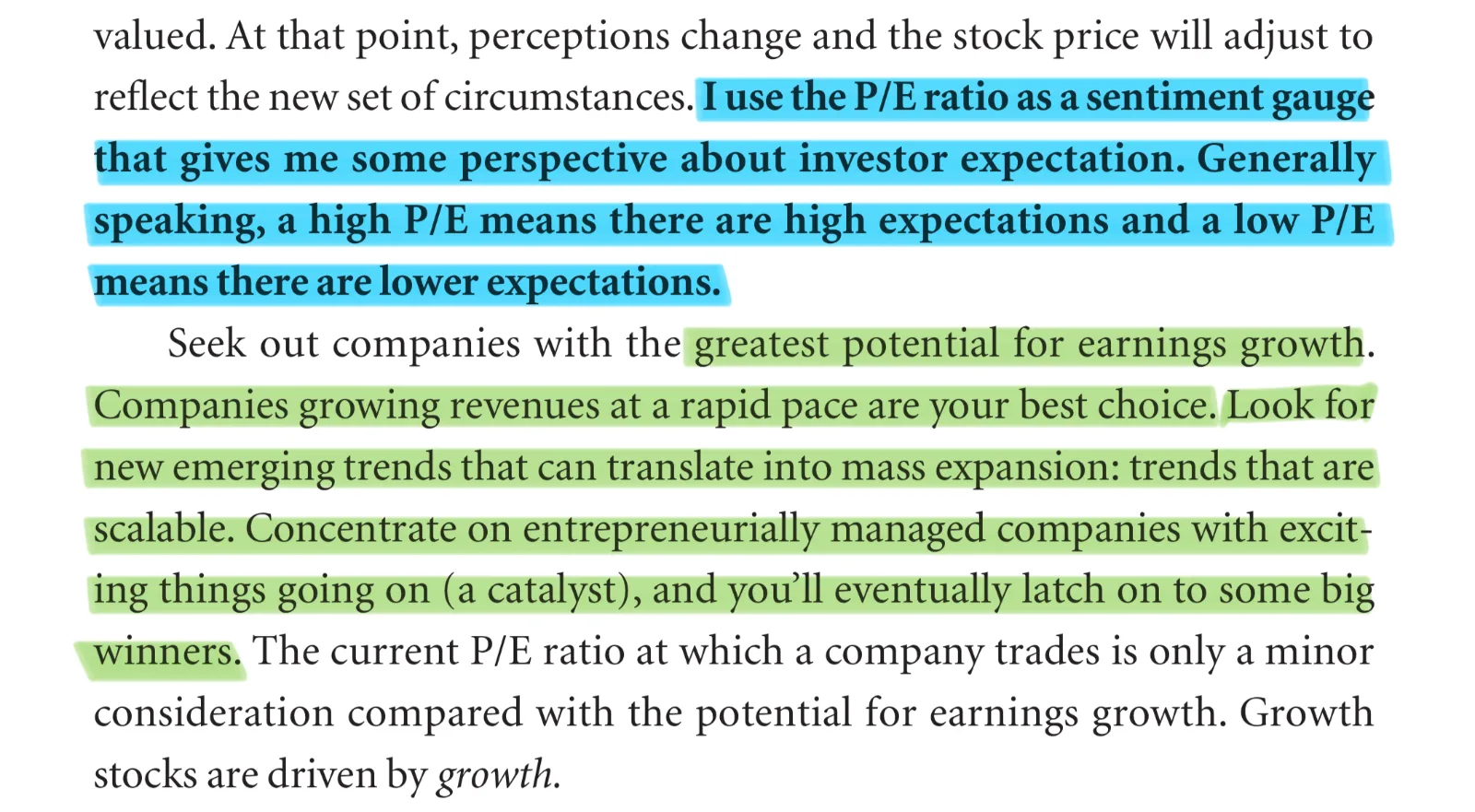
2. Don’t let a low P/E fool you.
Instead of simply looking for cheap stocks, look for strong earnings growth, emerging trends and catalysts. A stock trading at a higher P/E with strong growth can be more interesting than a cheap stock with poor prospects.
Before calling this newsletter to an end, I wanted to share one verse from the Bhagavad Gita that I often remind myself of whenever I find myself slipping into procrastination:
niyataṁ kuru karma tvaṁ karma jyāyo hyakarmaṇaḥ
śharīra-yātrāpi cha te na prasiddhyed akarmaṇaḥ
“Action is better than inaction. Without action, even the maintenance of the body would not be possible.”
I think this is such a simple but powerful reminder.
We often wait for the right mood, the right time, or the right conditions to start.
But sometimes, the best way to overcome procrastination is simply to start doing the work.
On that note, thank you so much for taking the time to read this. ❤️
I hope you found something useful in this week’s Concall Reading List and book learnings.
Disclosure: This is not a buy/sell recommendation. Please do your own research before making any investment decision.
Also, we recently made 3 unique StockScans videos as part of our weekly series. If you’re looking for ways to scan and track stocks beyond just technical and fundamental filters, you can check them out here → https://youtu.be/8cxLMyY4HnQ?si=yz9TKrnzzRG6eN5q
Until next week,
Keep reading. Keep learning. Keep tracking. 📚📈
Comments