

What I Learnt From Listening to Management Interviews Today
October 12, 2026 | StockScans Daily Management Interview Series
21 management interviews. 10 industries. 2 earnings concalls.
Some interesting things came up in today's management commentary. A defence company talking about exports being its most profitable business. A wealth manager that has grown profits by more than 20% every quarter since listing. A housing finance company holding on to its disbursement guidance despite an operational setback.
We went through today's interviews and concalls. Here are eight conversations worth your time, along with a few details that deserve a closer look.
1. Zen Technologies: The export business is becoming more interesting
One detail from Zen Technologies' interview stood out.
Management said exports are now its highest-margin business, followed by simulators and counter-drone systems.
This is worth keeping in mind when studying the company's growth. Investors tend to track order wins and the order book closely in defence businesses, but the mix of orders matters too. Two orders of the same value can have very different implications for profitability.
There is also an interesting shift happening within its simulation business. Management indicated that the Army currently accounts for around 80–85% of simulation work, but its share could move towards 50–60% as the business expands across other forces.
If this shift plays out alongside higher export contribution, the earnings profile could look different from what headline revenue growth alone suggests.
What we would track: Export revenue as a share of total revenue, segment margins, order conversion and whether the expected diversification in simulation demand starts showing up in actual numbers.
The opportunity is interesting, but the available interview excerpts do not provide enough detail to quantify its potential impact on earnings.
Detailed Interview: https://www.youtube.com/watch?v=4Fp0c9kc8h8
2. Anand Rathi Wealth: Twenty consecutive quarters of 20%+ profit growth
Anand Rathi Wealth has delivered more than 20% year-on-year PAT growth in every quarter since its December 2021 listing.
In H1 FY27, revenue grew 17% to ₹693 crore, while PAT increased around 23% to ₹238 crore.
The client numbers make the story more interesting. The company added 1,500 net client families over the last 12 months, taking the total to 14,309. Attrition measured as a percentage of AUM was just 0.17% in Q2 FY27.
For a wealth management business, this combination deserves attention. Acquiring new clients is one thing; retaining existing clients and growing the relationship over time is another. Low attrition can make the business more predictable, although market movements still influence AUM and reported revenue.
Management continues to indicate a long-term growth range of 20–25%, with margins guided at 40–45% over the next five years.
One qualification: management itself described AUM as its most volatile guidance metric because it is measured on a particular date and is influenced by market levels.
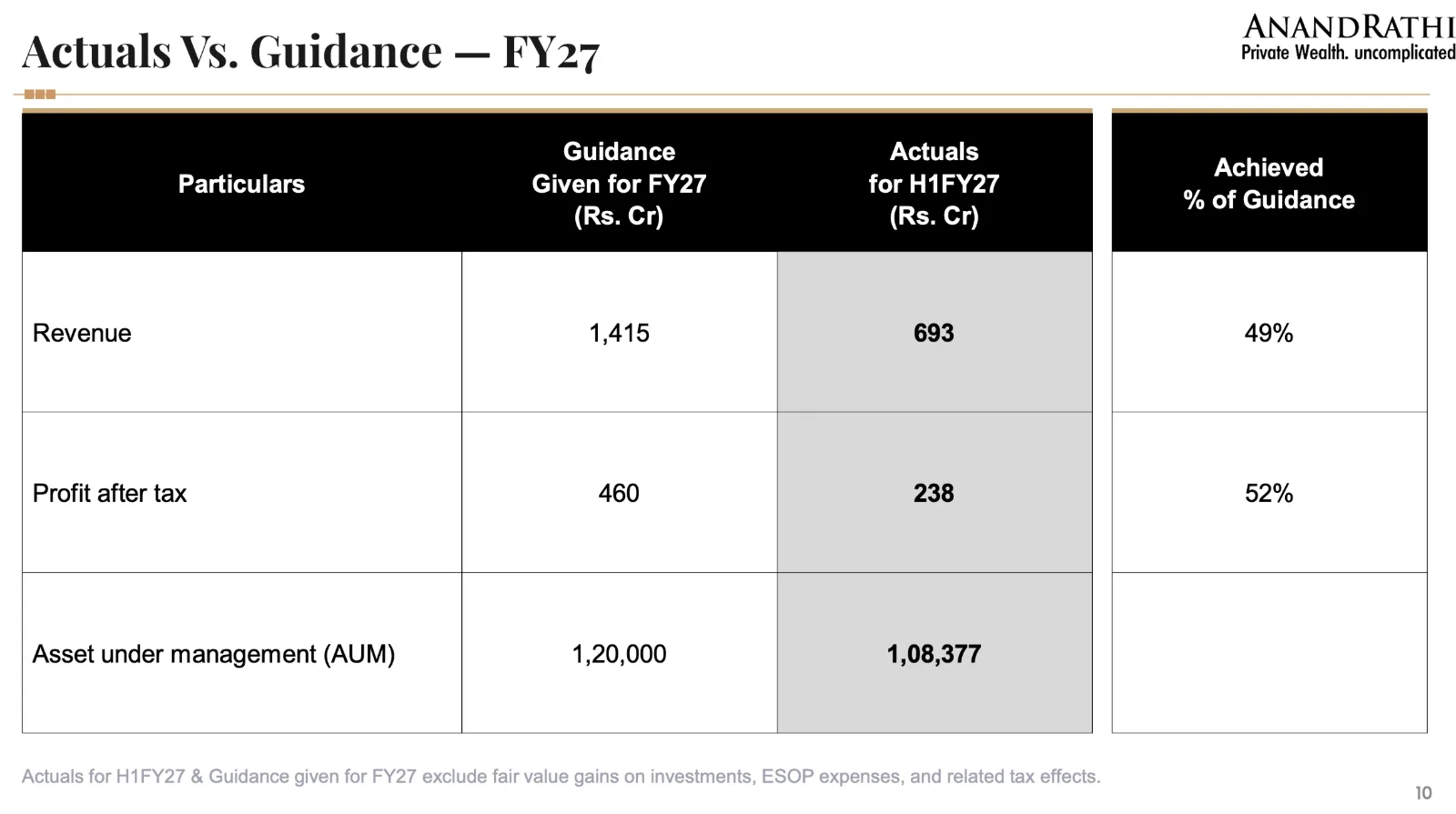
What we would track: Net client additions, AUM attrition, net flows and the gap between AUM growth and revenue growth. The important question is whether the company can sustain its growth without compromising the economics of the business.
3. Can Fin Homes: What happens when execution slips but guidance stays intact?
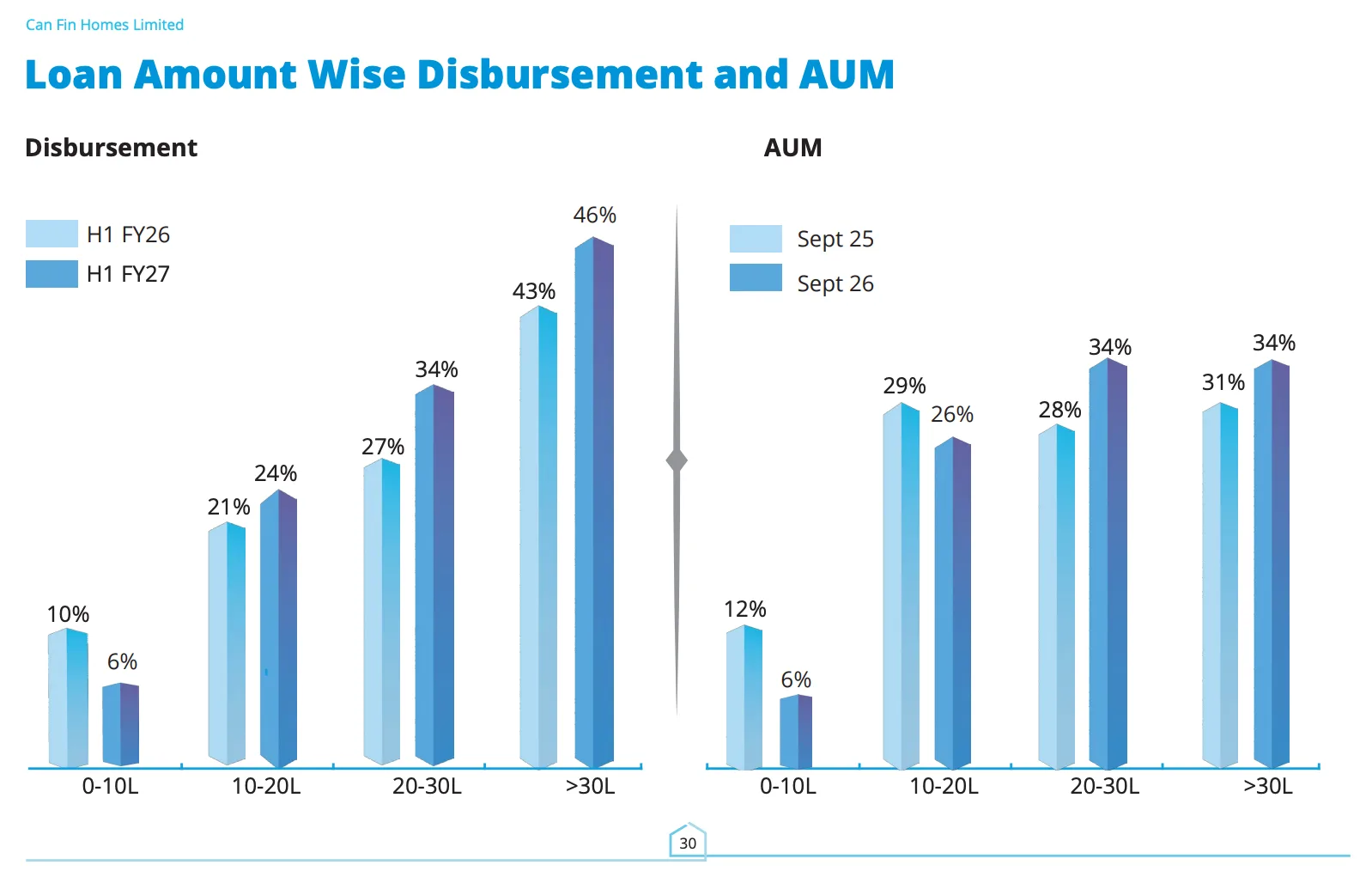
Can Fin Homes had a software migration issue that affected disbursements during the quarter. Analysts estimated that the disruption could have resulted in a shortfall of approximately ₹357 crore.
Despite this, management retained its FY27 disbursement guidance of ₹13,000 crore and expects AUM growth of around 13–14%.
The concall provides useful context. The company had planned quarterly disbursements of ₹2,500 crore, ₹3,000 crore, ₹3,500 crore and ₹4,000 crore. Q1 disbursements came in at ₹2,600 crore, ahead of plan, providing some cushion before the subsequent disruption.
Management also said corrective measures had begun in October across branches. On the distribution side, the sales team is being expanded, with the company targeting more than 120 people by December against a planned team size of around 150.
There is a difference between a temporary technology-related disruption and a business experiencing weaker demand. The next couple of quarters should help investors understand which explanation holds up.
But guidance alone is not proof that the issue has been resolved.
What we would track: Monthly and quarterly disbursements, branch productivity, prepayments, borrowing costs and NIM. If disbursements recover while spreads remain protected, management's explanation will have stronger support.
Detailed Interview: https://www.youtube.com/watch?v=z2MhKpqL2mI
4. Indian Hotels: The smaller business could grow faster than the larger one
Indian Hotels is organising its operations around two broad businesses: select-services and full-services.
Management indicated that select-services could grow its top line by around 25–30%, while full-services is expected to grow by approximately 15–20%.
The difference is meaningful. A consolidated growth rate can hide the fact that a smaller segment is expanding considerably faster than the company's established business.
For investors, however, faster growth does not automatically mean a better return on capital. The economics of expansion matter. How much capital does each new property require? How quickly does it reach maturity? What happens to margins as the network grows?
Those details are necessary before drawing conclusions about which segment will contribute more to future profits.
What we would track: Revenue contribution from select-services, property additions, capital expenditure, profitability and returns on incremental investment. The interesting part is not just which segment grows faster, but how efficiently it grows.
Detailed Interview: https://www.youtube.com/watch?v=aPpk1jRtYGI
5. Milky Mist Dairy: The product mix is the part to watch
Milky Mist management said demand across value-added categories such as ice cream, cheese, paneer and yoghurt is growing at around 15–20% year on year. The CEO also indicated that the peak of the opportunity is yet to come, supported by additional capacity.
This is an interesting business distinction.
Dairy is not one uniform market. Selling commodity milk and selling branded, value-added products can have very different competitive dynamics and margin profiles. A company that builds its business around value-added categories is attempting to capture more value from the underlying raw material.
But the demand story is only one side of the equation. Dairy input costs, utilisation of new capacity and distribution economics will influence how much of that demand translates into profits.
The available interview does not quantify the expected margin improvement, so that part still needs to be established through financial results.
What we would track: Revenue growth by category, milk procurement costs, gross margins, capacity utilisation and working capital. Sustained category growth alongside improving margins would make the story more convincing.
Detailed Interview: https://www.youtube.com/watch?v=x57DnFYSs9k
6. Waterways Leisure: More vessels do not automatically mean more profits
Cordelia, operated by Waterways Leisure Tourism, discussed growth from additional vessel capacity and the impact of TCS no longer weighing on the business in the same way.
Management indicated an average ticket price of approximately ₹11,000 per passenger and said bookings were being made well in advance.
The interesting question is what happens after capacity is added.
A new vessel creates the opportunity to serve more passengers, but it also introduces costs. The economics depend on how quickly the capacity fills, the prices customers are willing to pay and the costs of operating the additional vessel.
Pricing is particularly important here. Management expressed hope that prices would recover towards last year's levels, but the available commentary does not establish the extent of that recovery or provide enough occupancy data to assess it.
What we would track: Occupancy, average ticket price, revenue per passenger, vessel utilisation and operating costs. The sequence matters: capacity must be absorbed by demand before investors can assume it will improve profitability.
Detailed Interview: https://www.youtube.com/watch?v=49VCDJaPZOw
7. Glass Wall Systems: Be careful about whose guidance you are quoting
Glass Wall Systems offered a useful reminder about reading management interviews carefully.
During the discussion, a growth range of 32–35% was raised by the interviewer, alongside EBITDA margin guidance of 23–25% for FY27. Management, however, clarified that the company's historical top-line growth had been around 22% CAGR.
These statements should not be treated as equivalent. A number mentioned by an interviewer is not necessarily a number management has committed to delivering.
Management also discussed freight costs, suggesting that their impact on the reported bottom line did not necessarily reflect a deterioration in underlying operating margins.
For investors, there are two separate questions here. Can the company accelerate revenue growth beyond its historical rate? And can it deliver its margin guidance despite cost pressures?
What we would track: Actual revenue growth against the historical trend, EBITDA margins and the reconciliation between freight costs and underlying operating performance. We would wait for clearer management confirmation before treating the higher growth number as guidance.
Detailed Interview: https://www.youtube.com/watch?v=r0kVlu8UkV8
8. MedPlus Health: A regulatory headline needs more than a headline reaction
MedPlus management was openly sceptical about proposals to regulate pharmacy margins, questioning how the measures would be implemented and whether they would achieve their intended purpose.
Management's position was that it would be better not to interfere with the existing system.
This is useful commentary, but it is not enough to settle the question. Management's opinion tells us how the company views the potential impact; the actual economics will depend on the final regulatory framework and how it is implemented.
The interview excerpts available today do not provide fresh store-level margin or expansion figures, so we would avoid drawing a broader conclusion about the company's operating performance from this discussion alone.
MedPlus sells very little oncology medicine less than 0.1, 0.2% of overall sales, so the margin rule’s impact on the company would be negligible.
What we would track: Official policy developments, the scope of any proposed price or margin controls and the eventual impact on pharmacy economics.
Detailed Interview: https://www.youtube.com/watch?v=KkkJRnX8CYA
Some interesting snippets from today's Q2FY27 concalls.
ICICI Prudential Asset Managment:
SIF AUM nearly doubled QoQ: Quarterly average AUM jumped from ₹2,678 crore to ₹4,948 crore, making the new category a material growth vector with economics similar to mutual funds.
Equity AUM grew 16.3% YoY, outpacing the industry: The company captured one of the highest net flow shares in H1 FY27 even as investor preference rotated sharply toward mid and small-cap strategies.
Canara Robeco Asset Management Company:
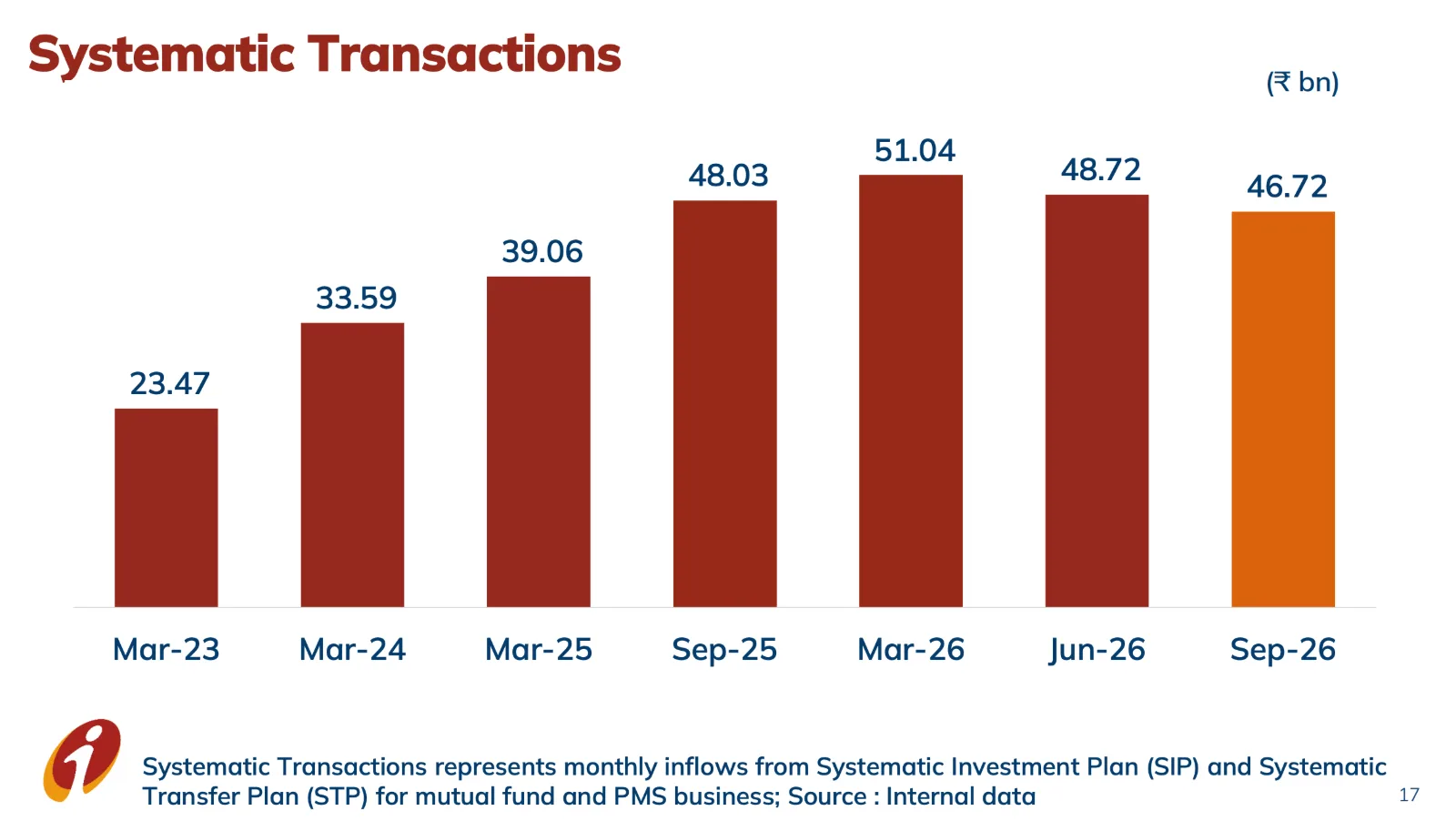
DIIs more than offset foreign selling with net purchases; monthly SIP contributions crossed ₹32,000 crores; SIP accounts crossed the 10 crore mark. The domestic retail investor base is increasingly steady, long-term, and price-agnostic.
Total SIP AUM reached roughly ₹41,000 crores, about 34% of AUM, though SIP accounts and folios declined on ELSS tax changes, maturities, and volatility-driven closures.
Equity is 91% of AUM, which supports long-term yield but makes PAT sensitive to market cycles; management still believes equities outperform in seven of ten years.
A Thought from the Bhagavad Gita 🪷
“Bandhur ātmātmanas tasya yenātmaivātmanā jitaḥ” ~ Bhagavad Gita 6.6
One who has conquered the mind finds a friend in it.
In investing, controlling your own mind is often harder than analysing a business. Patience, discipline and keeping emotions in check matter.
And if you enjoyed today's StockScans Daily, drop our signature comment ~ “mazza aagya” 😄
Don't forget to subscribe to StockScans Premium or renew your membership this festive season using our Navratri coupon code.
Also, make the most of our Navratri festive offer. Subscribe to StockScans Premium or renew your membership using our Navratri coupon code.

See you tomorrow.
Amit
Disc: Not a Buy/Sell Recommendations.
Comments